
Why Burnley has two war memorials and the bitter dispute that divided the town
The fascinating story behind Burnley's two war memorials.
A bitter dispute over the location of Burnley's war memorial led to former servicemen threatening to boycott the town's Remembrance Day parade and ultimately resulted in a second monument being erected.
The row, which dragged on for more than a decade, saw veterans clash with Burnley Council over plans to move the original cenotaph from Towneley Park to the town centre.
The disagreement was finally resolved in 1966, when a second memorial was unveiled in the Civic Gardens, almost 40 years after the original monument was erected.
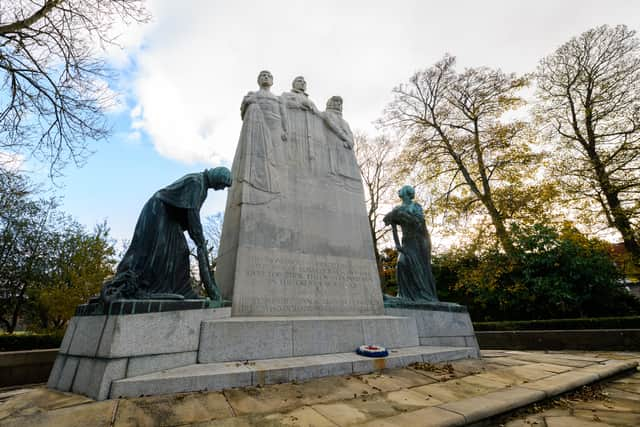
The Towneley Park cenotaph was unveiled by the Earl of Derby on December 12th, 1926, before an estimated crowd of between 20,000 and 30,000 people.
Designed by Birmingham sculptor Walter Gilbert, it was funded largely through a £5,000 bequest from former Burnley mayor and cotton manufacturer Caleb Thornber, with a further £900 raised through public subscriptions.
The striking monument features figures representing the Navy, Army and Air Force, alongside two female figures symbolising the grief of mothers, wives and sisters left behind.

However, by the mid 1950s, former servicemen were becoming increasingly frustrated by its location, arguing that it was too far from the town centre and difficult for some people to reach.
According to historical records preserved by Burnley Civic Trust, the chairman of the Burnley United Council of Ex Servicemen's Associations formally raised the possibility of relocating the cenotaph in May 1956.
Suggested alternative locations included the Civic Gardens and Church Street.
By July 1957, the council had agreed in principle to the move, with the estimated cost of relocating the monument put at between £4,000 and £5,000.
But in October 1959, councillors reversed their position and withdrew their support for the scheme.
The decision sparked anger among former servicemen, who threatened to join Brierfield's Remembrance Day parade in 1960 unless the memorial was moved.
The dispute continued for several more years before a compromise was finally reached.
Instead of moving the original cenotaph, the council agreed to allow a second memorial to be erected in the Civic Gardens on Grimshaw Street.
The Burnley and District Association of Ex Servicemen launched a public appeal to fund the new granite memorial, receiving donations from across the country.
Among the most generous supporters was Annie Ratcliffe, the association's 90 year old president, who contributed £1,000 towards the project.
The campaign was also supported by Lieutenant Colonel John Whittaker and local businessman Eric Cookson, whose construction company erected the memorial free of charge.
On October 30th, 1966, hundreds gathered in the Civic Gardens for the unveiling ceremony, with Miss Ratcliffe given the honour of unveiling the memorial.
Just weeks later, Burnley held two separate Remembrance Day services, with around 500 people attending the traditional ceremony at Towneley Park and hundreds more gathering at the new town centre memorial.
Both monuments remain important places of remembrance today, serving as tributes to those who lost their lives in conflict and reminders of a remarkable chapter in Burnley's history.
Burnley's Remembrance Sunday parade and service will take place this Sunday. Members of the public can watch the parade from 10.30am outside Marks and Spencer on St James' Street or gather at the Peace Gardens from 10.45am. The service begins at 10.50am and will include prayers, readings, music and the laying of wreaths.
A further service will take place at the Peace Gardens on Wednesday November 11, Armistice Day, beginning at 10.50am and including the national two-minute silence at 11am.