
Your chance to own piece of Lancashire history as rare Burnley bank note goes under the hammer
A special auction is to take place this month - featuring a piece of Lancashire banking history.
The Stanley Gibbons Baldwin’s auction will be held live at 399 Strand, London, and online on Thursday, January 29, the first bank note auction the company has presented for several years.
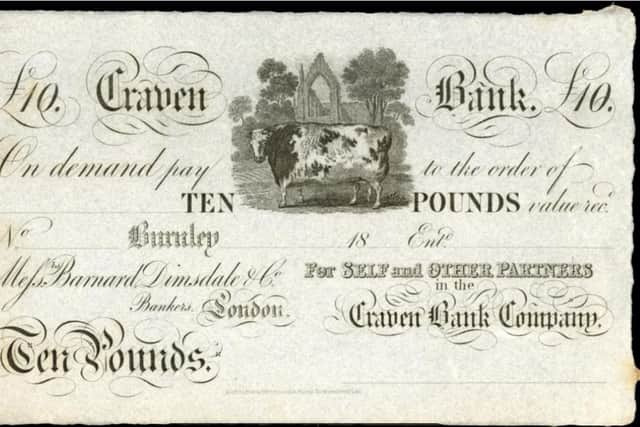
One of the highlights on offer will be a £10 note issued by the Craven Bank of Burnley, unisssued and dating from just prior to 1880.
The Craven Bank was founded in 1791 and went through a number of forms throughout the 19th Century. Although its head office was in Skipton, this banknote was issued for one of its branches at Burnley.
The bank adopted the Craven Heifer (a cow bred at Bolton Abbey in 1807 which lived in the early 19th Century and remains the largest cow ever shown in England) as its emblem and it appeared on the banknotes in the form of a beautifully engraved vignette.
These banknotes notes were colloquially referred to as “the notes wi' the cow on.” The bank survived and was eventually taken over in 1906 by the Bank of Liverpool and its head office building in Skipton High Street is now a Barclays.
The item will be heading estimated to sell for £70 – 90.

Provincial private banks
The provincial private banks of England provided the invaluable function of supporting and promoting the Industrial Revolution. The Bank of England really confined itself to the City of London and with very little exception, never established any branches outside of the capital.
Each provincial bank could issue its own banknotes, although legislation in 1777 prohibited banknotes under £5. - but in 1797 this was reduced to £1 or 1 guinea due to the financial strains of the war with France.
After the French were defeated, this was raised to £5 in 1825 and no lower denominations were issued until the next century. In 1844 there were 442 different banks operating in England and Wales and at that point it was legislated then that no more private banks could be set up.