
Bygone Burnley: historian Roger Frost MBE guides us through the history of Cockden hamlet in Briercliffe
Roger Frost MBE takes us on a journey through the history of Cockden hamlet in Briercliffe, uncovering its origins and significance in the area
Our Bygone Burnley episode today sees us vist the pretty hamlet of Cockden in Briercliffe.
Respected local historian Roger Frost MBE guides us around the tiny idyll, which began life as an agricultural setting, much as it still is today.
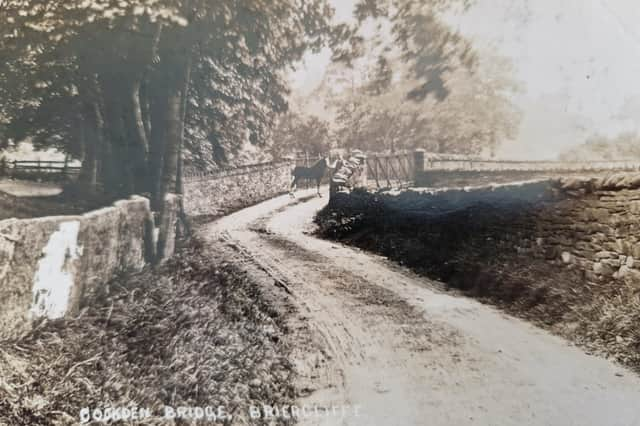
We begin our journey, though, just outside Cockden at the water’s edge where Roger reveals Cockden Water, a stream that rises at Thursden and changes its name to the Don, a name which means cold water in the Celtic language, spoken in the area before the Romans arrived.
Our video features an old photograph of a bridge over the stream.

On the subject of etymology, Roger next tells us about the unusual name of Cockden.
“The name, split into its two syllables, sees ‘cock’ which refers to bird, probably the woodcock, which were hunted here alongside other birds for food. All sorts of wild birds were once part of the diet. The ‘den’ part of the name referrs to a valley.”
We also look at the Croft, an 18th Century barn, now converted to houses, which has windows taken from a now demolished house in Nelson.
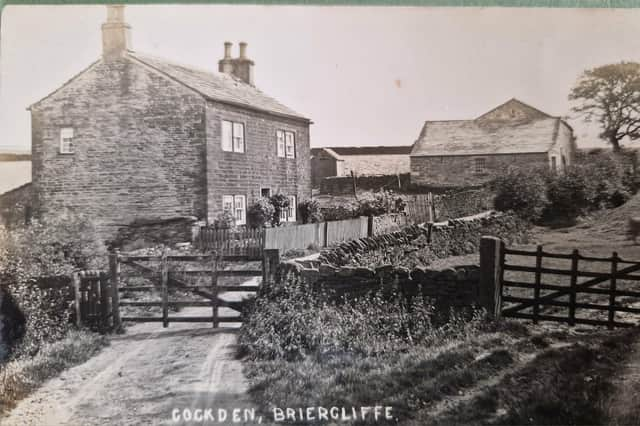
Lower Cockden Farm, or historically ‘Two Stoops’, is our next port of call. The handloom weaver’s cottage was so-called as it was a gateway to “a really lovely walk over the river to Ormeroyd Bridge.”
Roger added: “In medieval times there was a country market held here on a saint’s day. These were religious events where people would come and purchase blessed water. It was pure water when I was a boy. You can still see the site where the stalls were. We’re not sure which saint it was, but these Christian centres were usually dedicated to St Ann.”
Filming directly outside Lower Cockden Farm, we can see the now bricked-up former gable-end window, used by the handloom weavers to take maximum sunlight which was needed for the process.
Finally we look at Cockden House and its coach house, now domestic properrties. The former was the home of one of the branches of the Halstead family who moved to Lancashire from East Anglia as the wool industry here increased in the 16th Century. They lived here for 400 years.
The earliest mention of a Halstead, Roger tells us, can be seen in the 1562 Christenings book at St Peter’s Church in Burnley where a son was born to a Hugh Halstead. They became landowners as well as wool merchants.