
Bygone Burnley: Queen's Park, with historian Roger Frost MBE
Our Bygone Burnley episode today takes us to the town’s oldest park, Queen’s.
Respected local historian Roger Frost MBE guides us around the park which opened in 1893. It was commissioned a few years earlier to commemorate Queen Victoria's Golden Jubilee, with land donated by Sir John Thursby in 1888.
Roger explains how, when the borough was founded in 1861, Burnley councillors and aldermen “were not interested” in the civic trend at the time of building public parks, preferring instead to build lots of smaller recreation grounds in each ward.
The country’s first public park at Birkenhead was created in 1847.
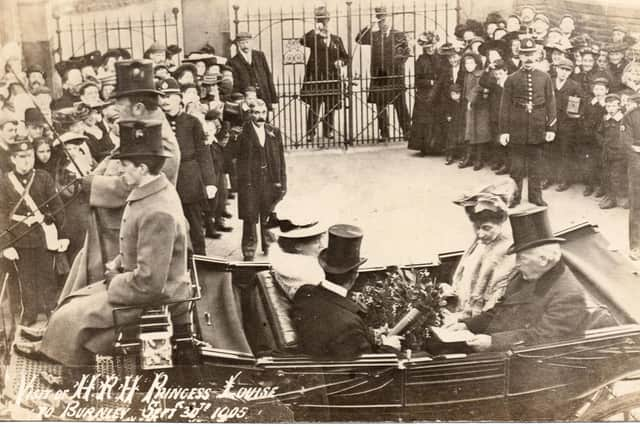

Sir John Thursby denigrated Burnley’s “little pleasure grounds” and wanted a proper public park.
Roger takes us first to Queen’s Park’s “sensory garden”, complete with mint and other pungent herbs and plants.
We next visit the park’s bowling green where Roger points out the park had a number of leisure facilities originally including a pitch and putt course, and also two “gymnasiums”, one for boys and one for girls. The gymnasiums had equipment for the boys.
Bygone Burnley: Bygone Burnley: Widdop, with historian Roger Frost MBE
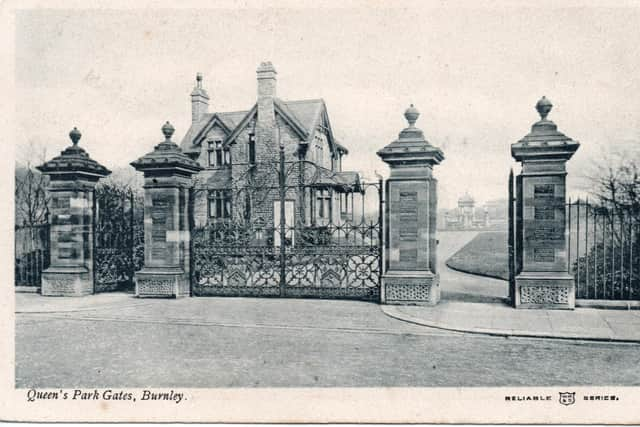
Roger next points out a line of trees that runs through the centre of the park cutting it in two, and the important reason behind their planting.
He said: “The trees, which cut the park in two, weren’t planted just to look attractive. Three Burnley collieries were linked by a ginny track railway that carried coal from Rowley and the Beehole mine near Turf Moor through the park to Bank Hall Colliery where it was put in canal barges for dispatch and used all over East Lancashire.
“The ginny track railway was a narrow gauge railway, the kind that didn’t have locomotives attached to the trains. It had a big steam engine below the ridge which drove the ginny track. It was a major feature but was quite a dangerous system. Burnley had lots of ginny track railways.”
Another original feature is the grandstand, which played host to Bank Hall’s brass band that played regularly in the park. The grandstand is topped with an imperial crown.
Finally, we look at how the park was divided in two in the 1920s in order to extend Belvedere Road. In 1924, a little was chopped off to extend Belvedere Road into Queen Victoria Road, something was greatly disputed at the time.