
Bygone Burnley: Widdop, with historian Roger Frost MBE
Our Bygone Burnley episode today takes us to Widdop, and the crossroads of two ancient kingdoms.
Widdop, an ancient packhorse route between Burnley and Hebden Bridge, today still cuts through beautiful countryside criss-crossed by the meandering streams of Graining Water and Hebden Water.
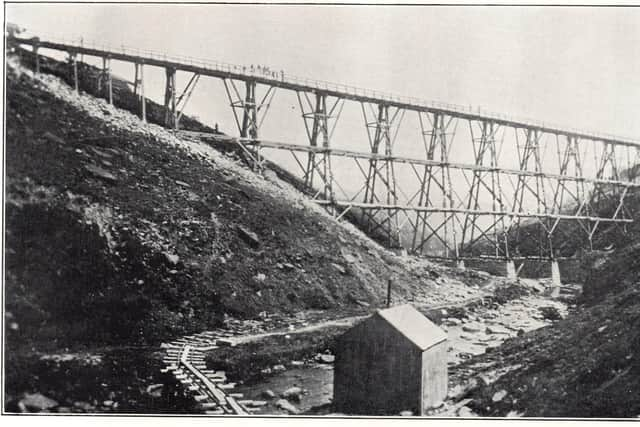
Historian Roger Frost MBE guides us around this stunning natural landscape, which once was even home to a substantial trestle railway bridge, which was used in the construction of Walshaw Dene Reservoirs, and demolished in 1912.
Of more pressing and immediate concern is the fear that the landscape around here, which includes the nearby National Trust beauty spot of Hardcastle Crags, is the subject of a plan to build a huge windfarm stretching across the moors, something which Roger is vocal about in his opposition.

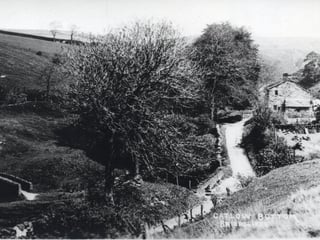
We touched on Widdop in our earlier episode about the Thursden Valley, but here we look more closely at the tiny area of Blake Dean, with its listed bridge and the remains of a former “upside down” Baptist chapel.
Our video begins, though, a little further back at the Briercliffe border sign, which Roger says was the junction where two ancient kingdoms met – notably that of Elmet, which occupied the Yorkshire side, based around Leeds, or Lodis as it was then called, and Theyrnllwg on the Lancashire side.
The Dark Ages kingdom of Theyrnllwg, occupying parts of Lancashire and further south, may have been a district of Wales occupied by the Ancient Britons before the arrival of the Anglo-Saxons.
The Battle of Chester in circa 615 AD had a significant role in the future of these kingdoms, Roger adds.
We next look at two stones or field boundaries, used by farmers in the early 17th Century before the invention of hinges.
A significant, now long-gone feature of this remarkable valley, however, is discussed next in our video – that of the timber trestle railway bridge, constructed to help build the Walshaw Dene reservoirs. The reservoir was the property of Halifax Corporation in those days.
Finally, we look at the “upside down chapel”, which was built in 1820 and demolished in 1971.
Theologian, evangelist and principal leader of Methodism, John Wesley, preached in the area before the chapel was built.