
Bygone Burnley: Catlow and Catlow Bottoms, with historian Roger Frost MBE
Our latest Bygone Burnley episode takes us to the remote agricultural hamlets of Catlow and Catlow Bottoms, straddling the border between Nelson and Briercliffe.
The unique settlements occupy a picturesque position above and around Catlow Brook where two fords and a centuries-old packhorse bridge are still significant features.
Local historian Roger Frost MBE first guides us around Catlow Bottoms, reached from Halifax Road in Briercliffe, before we journey up the hill to Catlow itself, which has its own fascinating history.
The packhorse bridge, Roger tells us, was first built in around 1560-70, although extra stones were added in Victorian times.
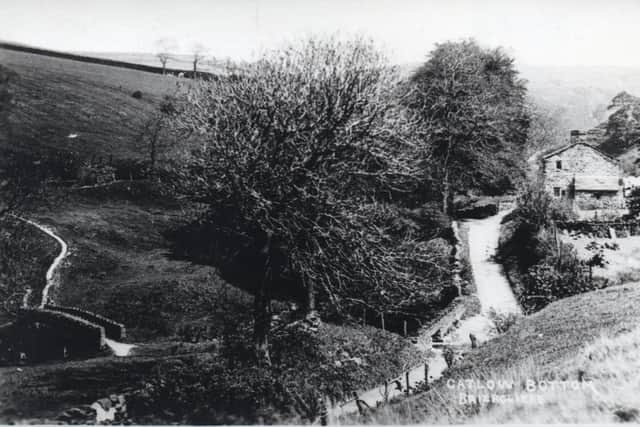

We next look at nearby Stepping Stones Cottage, above Catlow Brook, once made up of two cottages. Residents of the hamlet worked in the woolen and cotton industries, as well as nearby quarries.
Nearby, the anicent house of Burwains, first mentioned in the 10th Century and later rebuilt in 1642 was the home of the Briercliffes. A neighbouring family, the Foulds, known as Eckroyd, were involved in the textile industry.
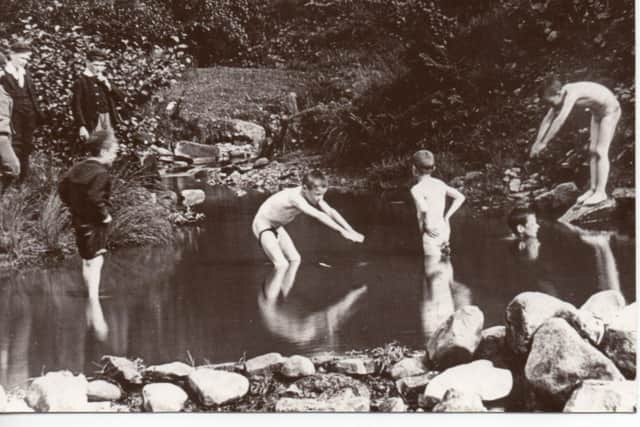
A bit further along from the cottages is the second ford, once a popular leisure spot with a natural swimming pool and stepping stones, which would attract families in the days before people went on holidays. Stepping Stones Cottage would sell jugs of tea, sandwiches and cake to those enjoying the picturesque area.
Sadly, a great tragedy struck the community in the 1840s when there was an outbreak of typhoid fever.
After a quick look at a tapper bridge, one of very few left in the Burnley area, we venture into Catlow itself.
The settlement gained its name, Roger says, from the old English low for hill and cat.
Catlow Court, made up of mainly former farm buildings including Catlow Hall, dates from the 1600s. There were originally three farms in the village, Roger tells us.
Catlow House was constructed by the family that ran the quarries in the village, stone from which was used in many significant buildings in Liverpool, particularly the area around St George’s Hall.
The stone was sent to Liverpool by rail from Nelson station, then known as Walton Sidings. The quarry itself had its own railway or tram lines.
Finally, we look at the site of a smallpox hospital, built on land near the quarries.