
Fewer hospital superbug cases detected at East Lancashire Hospitals Trust
Fewer cases of a hospital-related superbug were reported at East Lancashire Hospitals Trust last year, recent figures show.
This is despite the number of cases increasing across England.
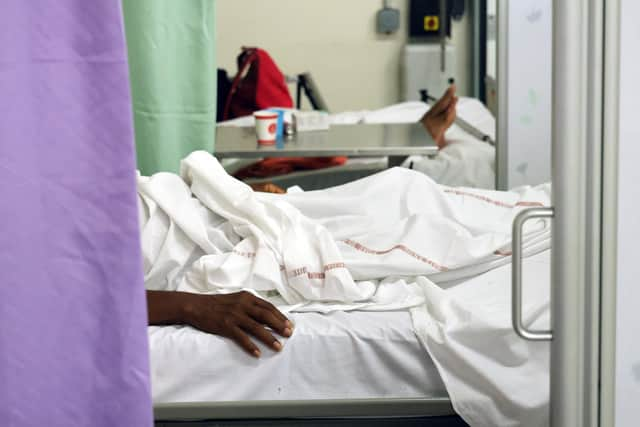

Clostridioides difficile (C. difficile) is a common hospital-associated bacterial infection that causes severe diarrhoea and can be life-threatening, especially in older people.
Data from the UK Health Security Agency published earlier this year reveals 148 C. difficile cases were reported at East Lancashire Hospitals NHS Trust in 2024-25, corresponding to 42 cases per 100,000 people.
It was down 11% on 166 cases the previous year, but a 29% increase from 115 cases four years ago in 2020-21.
Across England, UKHSA data shows some 18,970 cases were recorded in 2024-25, corresponding to 33 cases per 100,000 people.
It was up from 16,838 cases and a 29 per 100,000 rate a year earlier, and the highest figures since 2010-11.
Significant C. difficile outbreaks took place across the UK in the early-to-mid 2000s, with health experts saying infection control progress since has helped reduce the number of cases.
Jeremy Thorpe, managing director of Tillotts Pharma UK, said C. difficile is more likely to affect vulnerable patients in hospital, especially elderly people on antibiotics. This is because the treatment can disturb gut balance and create an environment susceptible for the infection to develop.
He said focus remains on respiratory diseases, as a result of the Covid-19 pandemic and surges in flu cases, but C. difficile awareness and testing should increase.
"One of the best things that the NHS could do is to increase suspicion of C. difficile. And with the increased suspicion of C. difficile, test more," he said.
A survey of 1,048 NHS employees across the UK, conducted by YouGov on behalf of Tillotts Pharma UK this summer, found "worrying variations in awareness" of the infection within the health service.
It showed 63% of respondents were unaware C. difficile cases have risen in recent years.
It further found about three quarters (74%) of NHS staff could not identify all the risk factors of the infection, almost four in five (78%) couldn’t identify all the correct protocols for suspected C. difficile and 21% said their workplace does not routinely test for the infection if a patient develops diarrhoea in hospital.
Dr Jane Freeman, associate professor in clinical microbiology at the University of Leeds, said: "We know from talking to patients that their experiences reflect the results of this survey – there is a great deal of variation in access to testing, treatment and support for those people with C. difficile infection.
"A lot of this comes down to a lack of awareness of the infection itself, and of the guidelines on how to deal with it.
"At a time when more people, particularly the elderly, will seek healthcare and be in hospital, more people will be prescribed antibiotics and the NHS faces increased winter pressures – awareness of C. difficile infection and how to prevent, diagnose and treat it is essential.
"This should be consistent across the NHS so that patients everywhere can receive the care they need."
An NHS spokesperson said: "All staff are trained to spot C. difficile through a mandatory training programme, and a new national improvement plan is rolling out to make sure patients are tested quickly and consistently across the NHS."