
East Lancashire blood test strike escalates as urgent cover withdrawn while routine backlog builds
A deal allowing some staff to carry on working has collapsed.
An agreement ensuring staff continue to provide urgent blood testing services during a strike at two Lancashire hospitals has broken down, the Local Democracy Reporting Service (LDRS) can reveal.
Blood sciences workers at the Royal Blackburn and Burnley General hospitals first walked out in June in a dispute over holiday pay. The employees, who are members of the Unite union, have been on strike every weekday ever since.
However, the union has now withdrawn the last of the so-called “derogations” that had been in place to help protect a range of essential tests from disruption - by allowing some staff to work in spite of the industrial action.
It means members are no longer providing laboratory cover related to urgent and emergency care, blood transfusions, surgery, cancer services, maternity and other time-critical patient treatment.
Some of the derogations agreed at the start of the strike on 15th June were withdrawn on 15th July, with the remainder being dropped on 6th August.
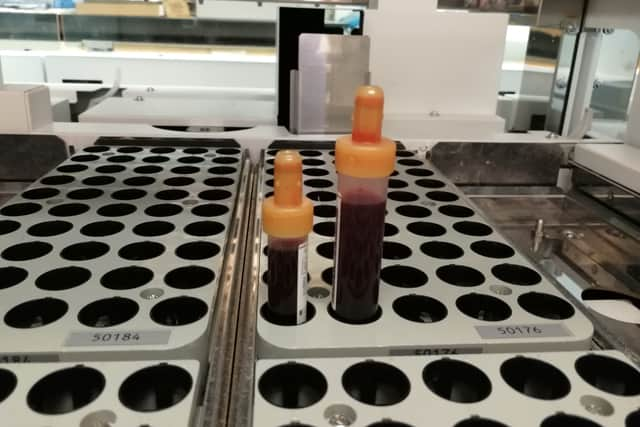
Meanwhile, there is currently the capacity to process only between 50 and 70 percent of the approximately 3,000 routine blood tests that would normally be requested each day by GPs across East Lancashire, the LDRS understands.
Lancashire Teaching Hospitals NHS Foundation Trust (LTH) - which is the lead employer for NHS pathology staff in all parts of the county except West Lancashire - says emergency care patients and other critical services are being “prioritised” with support from other hospitals in the county and third party providers. But it warned the derogation withdrawal is having “a significant impact on services”
The trust has deemed the overarching strike a ‘Level 2 Critical Incident’ - one step below the most severe category of concern - according to a report presented to a board meeting last week.

Unite says it backed out of the derogation agreements because LTH was trying to “undermine” the strike by giving staff routine work to do on shifts that they were still working during the walkouts - instead of just the “life and limb cover” the arrangement is designed to provide. It claimed the trust “still has the resources to provide critical cover” even without the union's co-operation.
LTH says it is currently powerless to resolve the issue at the heart of the dispute as it may have national implications which have taken the matter out of its hands. The trust has written to the union requesting the derogations are reinstated while it awaits the outcome of a review being undertaken by NHS England.
The LDRS understands LTH has been specifically asked not to forge a local resolution to the strike in the meantime. The national position is expected to be clarified shortly.
It is believed clinical advice has warned that the withdrawal of the derogations risks delays to diagnostic testing and clinical decision-making, along with reduced resilience within blood transfusion services.
The wider strike situation is understood to have caused a significant backlog in routine blood tests, affecting GP patients in Blackburn with Darwen, Burnley, Hyndburn, Pendle, Rossendale and parts of Ribble Valley - although clinicians can still mark tests as urgent so that they are prioritised accordingly.
Capacity for analysis of routine samples in East Lancashire - which would usually be carried out at Blackburn and Burnley hospitals - fluctuates from day to day. It has been built up gradually over the nine weeks that the action has continued, via a combination of assistance from unaffected hospitals in Lancashire and work commissioned from the independent sector.
Patients who have had a blood test postponed are being advised that they will be contacted to rearrange it as soon as capacity allows - and are being asked to co-operate with their GP surgery. The aim is ultimately to achieve a pre-strike level of service, even as the union action continues, LTH says.
The current round of month-long strike action - the third - will end on 4th September, but Unite says more stoppages will be scheduled if a resolution is not reached.
No other hospitals in the county are part of the dispute, including the Royal Preston and Chorley and South Ribble Hospital, which LTH runs.
What is the strike about?
The holiday pay issue relates to a grievance originally brought by Unite against East Lancashire Hospitals NHS Trust (ELHT), which operates the Royal Blackburn and Burnley General hospitals.
The situation has since been inherited by LTH after it took charge of pathology services for the whole of Lancashire and South Cumbria in April.
A tribunal previously found in favour of a single employee over the matter - but the union says the issue was not subsequently resolved for the rest of the workforce “who are now owed thousands of pounds”.
Biomedicine staff in East Lancashire work across different shifts which means their pay varies. Unite says the law dictates that holiday pay should be calculated on an average of all earnings - with the principle that a worker should receive no less while on holiday than they would get when working.
While LTH says its hands are tied because of the need for the national ramifications of the tribunal outcome to be assessed before it can address the issue locally, the union insists the trust could make an “interim payment to the workers…which would end the strikes”.
Following a request for comment from the LDRS, Unite issued a press statement in which general secretary Sharon Graham said: “Biomedical sciences workers are already under immense strain due to staffing pressures, yet the trust is refusing to pay them what they are legally entitled to. Unite stands firmly behind them in this dispute.
“Our members do not want to be on the picket line. They have been forced to strike by the trust’s disgraceful refusal to pay them the holiday pay they are entitled to and its abuse of their goodwill.
“This dispute will continue to escalate until the trust tables an acceptable offer.”
A spokesperson for the Lancashire and South Cumbria Pathology Service, led by LTH, told the LDRS: “The dispute centres on holiday pay following an employment tribunal outcome for a former individual colleague.
“Legal and national guidance suggests this may be a national issue and so we can’t resolve it locally at the moment, albeit we continue to engage in constructive discussions with Unite and are hoping for a resolution.
"We have always been clear that we respect the right of all colleagues to take industrial action. Our focus is on maintaining safe and high-quality services for patients. This is particularly important in blood sciences, where timely access to laboratory services is essential for providing blood transfusions, haematology services, biochemistry services and blood testing capacity.
"For this reason, prior to 6th August, arrangements had been in place throughout much of the industrial action period to protect critical services through agreed derogations. Those arrangements were withdrawn in [their] entirety by Unite on 6th August, with immediate effect.
“The withdrawal of derogations is having a significant impact on services and presents a serious challenge to our ability to maintain the range of blood sciences services normally available to patients. While extensive contingency measures are in place and urgent services continue to be prioritised, the impact on services is considerable and capacity remains significantly reduced.
"We have implemented extensive contingency arrangements, working closely with NHS partners and external providers to minimise disruption and safely increase capacity wherever possible.
“Patients requiring urgent and emergency care continue to be prioritised, alongside other clinically critical services. This has been possible through a combination of local contingency arrangements and support from NHS partners. Colleagues who remain in the laboratories are working extremely hard to keep services running and we would like to thank them for their ongoing support during a particularly challenging period.
"Our priority is to restore blood testing capacity and the full range of services to pre-industrial action levels as quickly and safely as possible. Capacity is being increased in a phased way, with appropriate testing and assurance processes in place to ensure patient safety."