
Burnley College students feature on BBC for peatland restoration work with Kew Gardens Grow Wild Youth Grant
Three Burnley College students who secured funding from Kew Gardens to support their efforts in restoring Lancashire’s precious peatlands have appeared on BBC North West Tonight to share why the cause matters so deeply to them.
Seventeen-year-olds Evelyn Kay, Eleanor Clunie, and Rosie Dowson – affectionately dubbed the “Sphagnum Squad” – have dedicated themselves to growing sphagnum moss, a remarkable plant known as the ecosystem engineer of the bogs.
After submitting their application to the Kew Gardens Grow Wild Youth Grant, they were delighted to learn they were just one of eight projects in the country to receive funding.
Eleanor currently studies A Levels in Environmental Science, Biology and Religious Studies, explained how the project has benefited them:
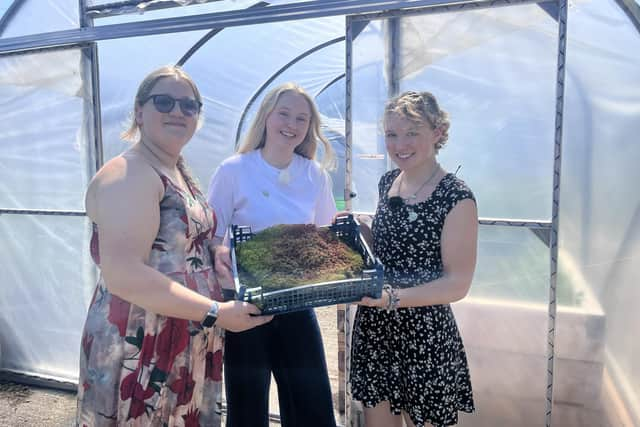

“It has given me a wealth of knowledge about how conservation is undertaken practically and how important having young people involved in ecology is important for the future of our ecosystems. It has given me an understanding about how critical our peatlands are to normal life.
“It’s also shown me potential careers and subject areas I may want to specialise in. I have loved doing it and I believe it is so important that more young people get involved in projects like this.”
Evelyn who is currently studying A Levels in Geography, Environmental Science and Biology, added that this is just the start of their ambitious plans:
“We are planning to continue the project by creating a conservation society, encouraging and involve others with what we are doing as well as participating in other environmental projects.”
The trio have been sharing their passion with primary school pupils at Burnley College’s annual Science and Technology Festival, where they devised hands-on activities to help young learners understand the importance of peatlands and the role sphagnum moss plays in sustaining them.
Their work caught the attention of BBC North West Tonight’s Environment Correspondent Judy Hobson, who visited the Science Festival to see the students’ efforts firsthand.
The students will now appear on the programme to discuss their project and why protecting Lancashire’s peatlands matters so much to them.
Helen Coar, A Level Geography Tutor at Burnley College, said she is filled with pride at their achievements so far:
“My students have done amazingly well and we’re really proud of all the work they’ve put into this project. This will earn them an additional qualification to add to their CVs.
“They were quite nervous when they learned the BBC wanted to interview them, but they did a fantastic job of explaining their work and were incredibly professional.”
Lois Clark, Engagement Officer at the Lancashire Peat Partnership added that the students have really impressed her:
“I couldn’t be prouder of these three girls. Watching them grow over the past year into confident, passionate young people has been such a privilege.
“Each of them brings something completely different to the project with their own strengths, personalities and ideas and seeing that confidence develop has been incredible.”
“To achieve something like this at such a young age is remarkable. They’re already making a real impact for nature in their local community and it’s fantastic to see them getting the platform and recognition they deserve through the BBC.
“They’re absolute star students and I know they all have incredibly bright futures ahead of them.”
Sphagnum moss can hold up to 20 times its dry weight in water, playing a critical role in reducing flood risk, storing carbon and supporting biodiversity.
Across Lancashire, Manchester and North Merseyside, 98% of lowland raised peat bogs have already been lost, making restoration efforts like those of the Sphagnum Squad more urgent than ever.
Healthy peatlands provide a host of environmental benefits. They act as natural carbon stores, holding approximately 30 per cent of the world’s terrestrial carbon despite covering just three per cent of land. They also filter drinking water, reduce wildfire risk and help mitigate flooding – making their restoration one of the most impactful environmental actions possible.
Learn more about peatland conservation on the Lancashire Wildlife Trust website: lancswt.org.uk