
Losses, FFP, bank loans and Premier League challenge: Kieran Maguire's verdict on Burnley's financial accounts

Burnley’s losses for the year covering their one season in the Premier League are a little higher than expected, according to a football finance expert.

The accounts cover the 12 months leading up to July 31, 2024, the period in which Burnley were relegated from the Premier League under Vincent Kompany.
Turnover increased from £64.9m to £133.6m due to the club competing in the top flight, as television rights jumped significantly from £47.8m to £110m.
The Clarets generated an operating profit, excluding player trading, of £10.1m, driven by the increase in turnover.
The accounts state that, in anticipation of lower turnover this season due to relegation, the club sold several players “generating a profit on disposal of £15.1m in this accounting period”.
The club recorded a total pre-tax loss of £28.9m for the financial year, having recorded losses of £35.1m in 2023. The losses are primarily driven by an increase in player amortisation of £20.5m to £42.6m.
The club’s wage bill also rose from £57.5m to £93.4m.
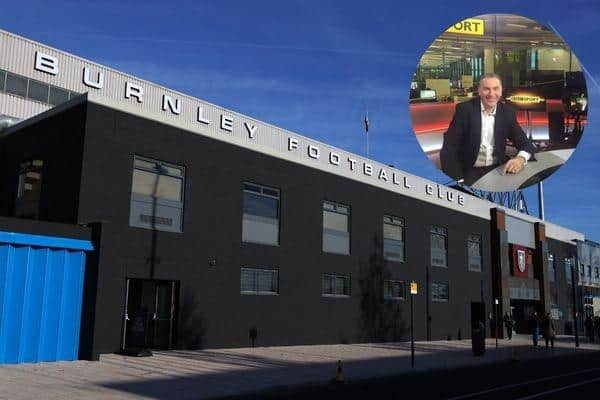

The Burnley Express spoke to Kieran Maguire – a lecturer in football finance and the man behind the Price of Football podcast – to get the lowdown on the club’s accounts.
Here’s what he had to say:
What were your overall thoughts on the accounts?
“I think the loss is perhaps a little bit higher than I expected, but the combination of being promoted, the player sales in 24/25, that's quite decent. It helps to reduce the debt.
Part of the reason why they lost a fair amount of money was that they paid £17m in interest last year and that's a consequence of the Alan Pace leverage buyout model, which is fine if you're in the Premier League. But it's more challenging if you're in the EFL.
“Revenue doubled, which is great. Wages went up by a fair amount.
“Compared to Luton and Sheffield United, Burnley made far more of an attempt to stay in the Premier League by investing in players. I think Luton ended up with a squad which cost £28 million. Burnley, by the end of last season, was about £190 million. It was a fair attempt to have a go. Sheffield United really didn't try.
“Both of those clubs were paying £25-28k a week, which is between a half and a third of the average in the Premier League, so they effectively budgeted to go straight down again. Burnley had a bit more of a fighting chance.
“It didn't work out in the end, but you can't say that they didn't invest, whereas I think that accusation could be levelled at the two other clubs.”
What were the main factors behind the losses?
“The interest and the amortisation. Because they put so much money into the squad, if you sign a squad for £200 million on five-year contracts, £200 million divided by five gives you £40 million, which is broadly where that number is, so, I think that does reflect the investment.
“It's a much harder division to survive in than five years ago, because you've got Aston Villa and Newcastle who were being promoted and got relegated in the middle of last decade. At the start of the season, perhaps 10 years ago or perhaps even five years ago, you said, ‘well, potentially these clubs could get relegated’.
“When Burnley are looking at the start of the season, who are our rivals for relegation? Previously you'd include Villa and Newcastle and the likes of Brighton. Maybe Brentford, Palace and potentially Bournemouth, but they're all starting to move away.
“Therefore, when you get promoted, you're going, instead of three from 10 could go down, it's probably three from five and that makes it so much more difficult for the clubs who are coming up.
“As we've seen in the last two seasons, they've both gone straight down again.”
After two years of losses, how are Burnley looking in terms of Financial Fair Play (FFP)?
“Last year the loss before tax was 36, this year it's down to 28. They're okay.
“The infrastructure costs aren't significant, but academy costs, you're probably talking, I don't know, four or five million a year. Spread that out over three years, that's £15m you add back to your calculation.
“But they’re okay. They’ve also got all these player sales since the year end. They sold them for £100m, but I don't know what the profits will be.
“But I don't see a problem and of course they've been promoted again.”
The bank loans have risen to £90m, what sort of impact will that have?
“It was a bit weird because they took out fresh loans of £111m and they repaid £89m, which is a strange approach to take.
“It's the way that the Alan Pace model works and it works provided the banks say, ‘we don't want the money back tomorrow’. You want it back in a few years. But I don't see that being a huge issue.
“In terms of the short-term loans, £70m needs to be repaid within a year, so that perhaps accelerated the player sales.
“What's more concerning, you look at the interest rates that they're paying and they're pretty sizable, which leads, of course, to this big interest charge in the end. They've got an unsecured £30m facility at 12.75 per cent. That's a bit more than we're paying on our mortgage.
“Why is it that a company is paying an interest rate which is so much higher than that will be charged to individuals? The fact that it's an unsecured loan, I think, gives you part of the answer there.”