
Lancashire's last remaining local election in 2026 cancelled
The one part of Lancashire where this year’s local elections were set to go ahead has had them cancelled by the government.
Voting was scheduled to proceed as planned in Pendle after the borough was last week left off a list of six other council areas in the county where ministers had decided to pull the plug on the scheduled polls.
However, the local government secretary announced on Thursday that he would now also scrap Pendle Council’s elections after receiving “further evidence” from the authority about how doing so would help it prepare for a forthcoming shake-up of Lancashire’s council system.
Local political reaction has seen the government accused of acting like “headless chickens” – and brought a call for senior figures within Pendle Council to quit because of their part in prompting the ministerial change-of-mind.
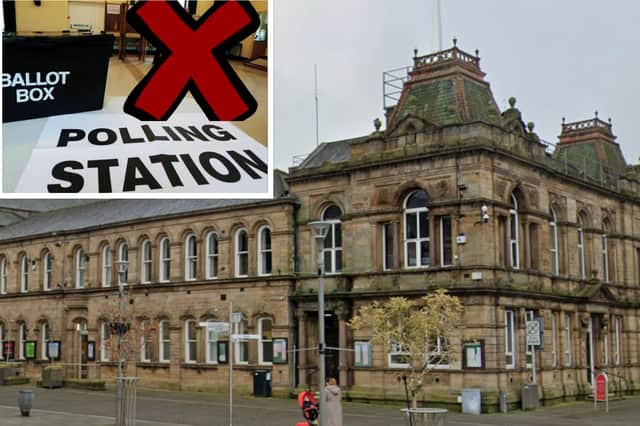

The U-turn is a major twist in the already convoluted story surrounding the fate of the scheduled vote in the district.
The government told any council that is to be axed in 2028 – as part of reforms ordered by ministers themselves – that it could ask for what was described as the “postponement” of its elections if they were due to take place in May this year.
Seven local authorities in Lancashire were invited to make the case for cancellation on the basis of any concerns they had over being able both to stage elections and prepare for the local government reorganisation (LGR) process that will see all 15 main councils in the county scrapped and replaced.
The proposition split the coalition that runs Pendle Council, with the authority’s Liberal Democrat leader, David Whipp, and his group opposed to making such a request, and all bar one of the independent councillors who run the authority in coalition with him supporting the move.
However, a majority of Conservative opposition group members voted with the independents at a special council meeting held earlier this month – resulting in the official council position being to ask the government to cancel the borough elections in 2026.
A letter outlining that stance was sent to the government by council chief executive Dean Langton. The Local Democracy Reporting Service (LDRS) understands that it did not bear Cllr Whipp’s name as leader, purely because it was at odds with his own wishes – but that he accepted it reflected the will of the council.
However, Pendle was told last week that it had not supplied sufficient evidence for the government to agree that the elections should be pulled – and it was publicly announced that they would be going ahead, making them the only polls of the seven scheduled to take place in Lancashire this year to be proceeding.
But the LDRS can reveal that the Ministry of Housing, Communities and Local Government (MHCLG) subsequently made it clear to Pendle that the department was open to reconsidering its position – if the council provided prompt additional evidence that met the threshold to support cancelling the May 2026 vote. Any rethink by the government had to come ahead of the necessary legislation to amend the local election schedule being laid before Parliament.
Steve Reed, Secretary of State for Housing, Communities and Local Government, said in a letter published on Thursday that he had “considered further representations from the Chief Executive and Deputy Leader on behalf of Pendle Borough Council… that provided further evidence of how postponing the election would enable the council to release capacity to support the delivery of reorganisation”.
Against that backdrop and in view of previous submissions from councils across Lancashire on the issue of this year’s local elections, he announced that the vote in Pendle would no longer be held in May.
Cllr Whipp said the U-turn showed that the government “are just running around like headless chickens”.
“I don’t think there’s any justification for cancelling elections – and they should have been going ahead across the whole of Lancashire,” he added.
However, he said he was content that the chief executive had continued to engage with the government in order to attempt to give effect to a council decision – even though it was one with which he, as leader, disagreed.
“If I’d leant on him and said, ‘Just leave it’ [and not submit any further evidence to support cancellation], that would have been betraying the wishes of the majority of [members] – and I’ve always been very clear that I will abide by a majority decision of the council.
The LDRS approached deputy council leader Asjad Mahmood – who also leads the independent group – about the additional submissions he made to the government after their initial decision not to cancel Pendle’s elections, but had not received a response by the time of publication.
He told the meeting at which the vote to support cancellation was held: “The scale and pace of LGR places considerable demands [on the council] – it is time-consuming and resource-intensive. Clear governance, realistic timescales and effective management are essential to delivering a smooth and successful transition.”
Conservative opposition group leader Ash Sutcliffe – one of the minority of Tories who had voted against requesting the cancellation of the elections – said he was “disappointed” that the vote would not now be happening, but “more disappointed in the yo-yo politics of this government”.
“At least we are no longer a Lancashire outlier in this respect [holding elections when they had been cancelled everywhere else], so we will deal with the hand we have been dealt,” Cllr Sutcliffe added.
However, Mick Waddington, chairman of Reform UK’s Pendle and Clitheroe branch, blasted what he described as “an outright betrayal of democracy”, taking aim at both the government for having “no respect for the public it claims to serve”- and others closer to home on Pendle Council, where the party currently has just one member.
With Reform calling for the “immediate resignation” of Cllr Mahmood, Mr. Waddington said the deputy leader had chosen “to work against the people of Pendle rather than face them at the ballot box - that betrayal will not be forgotten”.
He added: “Dean Langton’s involvement is completely unacceptable. An unelected chief executive should defend democratic process, not help dismantle it. His impartiality is now in serious doubt and he should step down.“ The party said it was preparing formal complaints.
However, Cllr Whipp defended Mr. Langton, telling the LDRS he believed the council boss had acted properly.
“I think it’s utterly inappropriate for Reform to go gunning for a chief executive who is doing his duty [to fulfil] what the majority of the council want,” he said.
In a statement to the LDRS, Mr. Langton said the authority got in contact with the government “to clarify the reasons for the council’s request for a postponement” after the borough’s case had initially been refused.
“The government [has now] confirmed that it intends to postpone Pendle’s elections in line with the rest of Lancashire,” he added.
MHCLG was also approached for comment on the issues raised in this report.
The government last week announced it had accepted cancellation requests from Blackburn with Darwen, Burnley, Chorley, Hyndburn, Preston and West Lancashire councils – the latter coming from the authority’s leader only in her capacity leader of the ruling Labour group, as the council itself had not held a vote on the matter.
None of Lancashire’s other eight councils had been due to hold elections this year.
Nationally, Reform UK nationally has launched a High Court legal challenge against 29 local election cancellations connected to LGR, with a hearing set to be held on 19th February.
The whole of Lancashire will vote in May 2027 to determine the political make-up of the new replacement council for their part of the county, the size and shape of which will be determined by the government later this year.
That organisation will operate in so-called ‘shadow’’ form until April 2028 when it will formally come into being and take over from the councils whose days are now numbered.
Pendle Council has submitted a proposal for the borough to merge with Burnley and Rossendale in a new standalone council area, a plan that would create five new local authorities in Lancashire under the government-ordered overhaul to streamline the current two-tier system.
...