
Devolution: Five political leaders on Burnley Council unite against plan for so-called 'mega council'
Burnley’s five political group leaders have written to cabinet minister Steve Reed urging him to choose a post-Lancashire devolution model that merges the borough with neighbouring Pendle and Rossendale.
Their letter follows a full council resolution passed unanimously last week opposing any amalgamation with Blackburn with Darwen.
The politicians favour a five all -purpose unitary authority model which would see Burnley merged with Pendle and Rossendale and oppose the four other proposals submitted to government especially the three-council proposal which would create a much larger Pennine Lancashire body composed of Blackburn with Darwen, Burnley, Hyndburn, Rossendale, Pendle, and Ribble Valley.
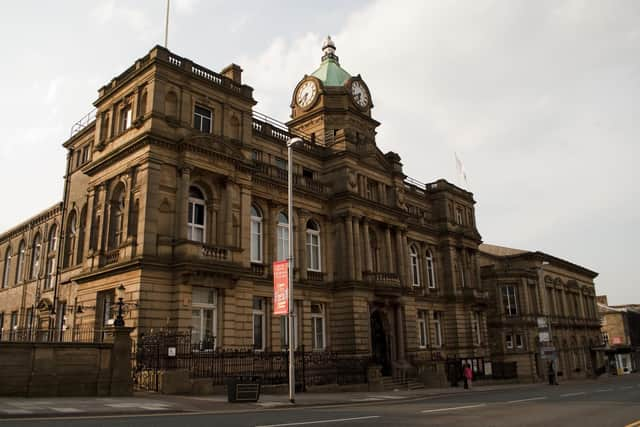

The letter to Mr Reed is signed by Coun. Afrasiab Anwar– leader of the council and leader of the Burnley Independent group; Coun. Mark Townsend – leader of the Labour group; Coun.Howard Baker – leader of the Liberal Democrat group; Coun.Jack Launer – Leader of the Green group; Coun. Alan Hosker – leader of the Reform UK group; and Coun. Jamie McGowan – leader of the Conservative group.
It tells him: “We note the the most recent announcements and decisions from the Ministry of Housing, Communities and Local Government (MHCLG), which confirm that smaller unitary authorities, such as those proposed in Suffolk and Norfolk are now recognised as credible, deliverable and desirable models for local government reorganisation.
“These announcements demonstrate a clear shift away from the assumption that “bigger is better.”
“You will agree that Lancashire is a proud county made up of proud cities, towns and villages, each with distinct identities that risk being diluted or lost entirely if large, soulless mega-unitaries are imposed.
“Any new structure will shape Lancashire for the next 50 years or more, and therefore requires meaningful, community-centred consideration based on potential for growth and prosperity.
“We note that the development of the mega three-unitary proposal only gained traction because of a literal and incomplete interpretation of the 500,000-population threshold, an approach now clarified by your recent actions.
“We believe that the five-unitary model for Lancashire:
- Best meets all government tests for financial sustainability, identity, service delivery and geography
- Is built around natural urban centres, making it the most coherent model for housing delivery and economic growth.
- Has an average unitary population of around 310,000, aligning closely with the direction of travel now endorsed by government
- Commands significant support from residents, as demonstrated through consultations and petitions from both the east and the north of the county; and
- Is likely to secure broader cross council/party support.
It ends by saying: Creating mega-councils under the guise of devolution is not the answer, and we welcome your recognition of this fact and hopes this approach continues.