
Bygone Burnley: Yorkshire Street and Gunsmith Lane with historian Roger Frost MBE
Bygone Burnley unearths the fascinating history of Gunsmith Lane and Yorkshire Street
A familiar Burnley junction with a fascinating past – from gunsmiths and breweries to schools, chapels and a canal culvert hidden beneath the modern town centre - is the focus of our latest Bygone Burnley feature.
For motorists and pedestrians passing through the junction of Yorkshire Street and Centenary Way today, it is difficult to imagine the very different scene that once occupied the same stretch of Burnley.
But renowned local historian Roger Frost MBE takes viewers back through that changing landscape in the latest instalment of the series.
The area is home to many iconic ‘landmark’ buildings - old and new - including Burnley’s parish church of St Peter’s, the neighbouring St Peter’s health and leisure centre, and the culvert.
At the heart of the story is Gunsmith Lane, a street which has disappeared from the modern town centre.
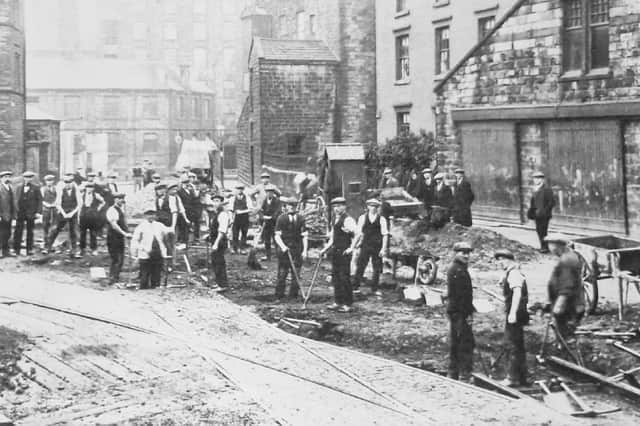

As Roger explains in the accompanying video, the lane was named after the gunsmiths who operated there during the 18th century.
The area was once a mixture of homes, businesses, places of worship and industry – including the imposing Keirby Brewery, also known as the Well Hall Brewery, a historic stone building which stood on Gunsmith Lane.
The brewery is just one reminder of the important role brewing once played in Burnley's economy and everyday life.
The name may have vanished from the modern road map, but its location provides an intriguing link with an earlier Burnley – when the town centre was a very different place.
Today's Yorkshire Street was itself once known by another name. Until the middle of the 19th century, it was known as East Gate, reflecting Burnley's development from a much smaller settlement into the busy town it would eventually become.
The Leeds and Liverpool Canal crosses Yorkshire Street on a culvert. The original structure dates back to 1795-96, when the canal was being developed through the town.
The structure which can be seen today, however, is a replacement built between 1925 and 1926.
It is an easily overlooked survivor from an earlier era, when the canal was a vital part of Burnley's industrial development.
The streets around it were also home to generations of children.
The former St Mary's Boys' School stood on Yorkshire Street during the mid-20th century, providing an important part of community life in an area which has since been transformed by redevelopment and changes to the road network.
Religious buildings were another prominent feature.
The former Sion Baptist Chapel was a substantial building on Yorkshire Street, with its Sunday school in nearby Chapel Street.
And St Peter's Church provides another link with Burnley's much earlier history. The land stretching from there towards St Mary's Church was once owned by Whalley Abbey, before the dissolution of the monasteries in the 1530s.
The site of the landmark Keirby Hotel is connected to John Keirby, who came from Liverpool in 1823 to sell barm, or yeast, before becoming involved in brewing.
The Keirby Hotel opened in 1958, with the building completed in 1960 – a particularly memorable year for Burnley football supporters as the town celebrated the club's Division One championship.
Other familiar landmarks have also had very different pasts.
The building now associated with Gala Bingo began life as the Cat's Whiskers dance hall, while the former Basket Street Works started as a cotton spinning mill before becoming an engineering works used by Whittakers to manufacture mechanical stokers.
It later became associated with Fred Loads, known to BBC Radio 4 listeners through Gardeners' Question Time.
Even the council's central transport garage became part of the area's history when it collapsed in 1969.
Today, much of this past has been replaced by modern roads and buildings, including St Peter's Centre, with its leisure facilities and swimming pool.
Centenary Way, meanwhile, marks a much more recent chapter in the town's story, taking its name from Burnley's centenary as a borough in 1961.