
Bygone Burnley: Read and Simonstone, with historian Roger Frost MBE
Our Bygone Burnley episode today takes us to the neighbouring villages of Read and Simonstone.
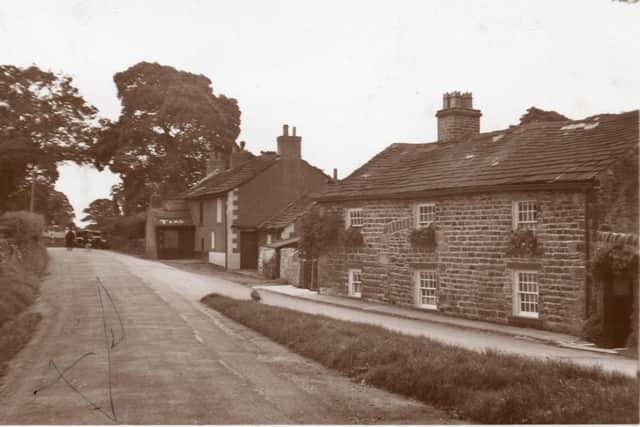
Straddling the border of the Ribble Valley and Burnley, these two attractive villages historian Roger Frost MBE describes as starting out as an “area of scattered farms, some of which dating from the 16th Century”.
Both agricultural communities for centuries until Read became a small hamlet on the old road between Whalley and Padiham in the mid 16th Century, Roger says the two have a piecemeal history, rather than conjoined.
Simonstone, Roger tells us, has a large number of listed buildings, some 22.

We begin our video in Read at the parish church known today as St John’s, Read, and St Peter’s, Simonstone, which dates back to 1884.
Roger said: “St John’s is not as well known as it should be. There wasn’t a church in either Read or Simonstone until modern times, although both have old histories. Simonstone was an area of scattered farms.
“Read had very good building stone – and was a source of stone and timber used in the building of Whalley Abbey and other structures in that area. There was also coal in both places, with mines in the area.”
Inside the church we see a striking memorial window to Burnley solicitor David Waddington who rose to become an important government minister, Home Secretary under Margaret Thatcher in 1989-90.
He served as MP for Nelson and Colne, and later for Clitheroe, before becoming Governor of Bermuda.
We next look at another prominent memorial in the church, that of a man with a much older past, and one covered previously in this series, Alexander Nowell, of Read Hall.
Nowell was an Anglican priest and theologian who served as Dean of St Paul’s Cathedral in London during much of Elizabeth I's reign, and is credited by some as being the inventor of bottle beer.
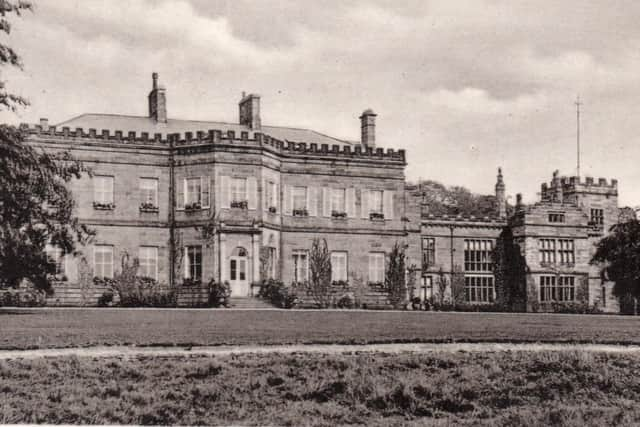
We next travel to Whins Lane in Read, near to the Sixteenth Century Huntroyde Hall.
Roger tells us here how Read and Simonstone got their names. It has been speculated that Sigmund’s Stone, who many believe owned the land in the pre-Norman era, had a boundary stone, thus giving Simonstone its present name.
Read, meanwhile, means ‘the headland of the female roe deer’ or ‘gentle hill by the deer park’.
We next look at the blue plaque installed in memory of cotton manufacturer Joseph Kemp, the builder of Victoria Mill and Friendship Mill in Read. In 1921 he gave land for a recreation ground and allotments for the township of Read.
Roger said: “Read developed as a hamlet on the old road, as we have already said, but Victoria Mill was built on the much later turnpike road. Read village, which we know today, originally known as New Town, with its terraced houses on the main road, is a consequence of the late Industrial Revolution.
Finally, we look at the old national school of Simonstone, built in 1879, situated opposite the current school.
“As soon as industry started and population oncreased you get churches and schools being built, and this is an example,” Roger says.
Roger then points out the attractive houses nearby, built by wealthy business owners in Burnley, which led to its name as “Burnley’s stockbroker belt.”