
Bygone Burnley: Lower St James' Street, with historian Roger Frost MBE
Our Bygone Burnley episode today takes us to Lower St James’ Street in the town, a once bustling thoroughfare of shops, pubs and theatres.
Today, the bottom end of Burnley town centre’s main high street has seen better days, although recent regeneration efforts are bringing parts back to their former glory.
Historian Roger Frost MBE guides us round the area, which he reveals formed the other half of early Burnley and was known as ‘bottom of the town’ or ‘Bridge End’.
“Burnley’s first Industrial Revolution era mills were here,” Roger said. “The area has only been known as St James’ Street since the late 19th Century.
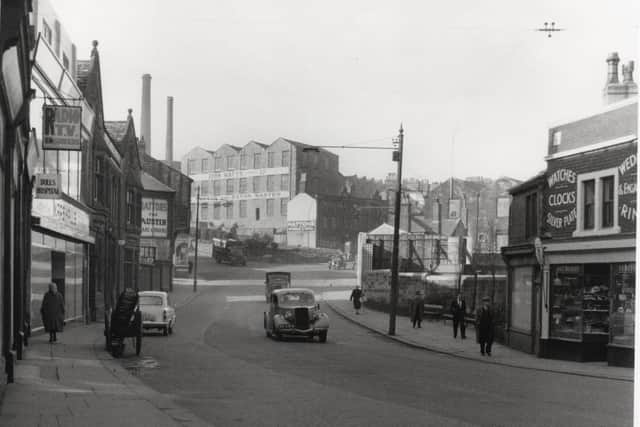

“The street linked with what was known as ‘bottom of the town’ or ‘Bridge End’ with top of the town, around which St Peter’s Church and the market were located. Burnley really is an amalgamation of two small communities.”
One of Burnley’s historic pubs, the Weavers’ Arms, was also located on the street, but there were lots of other things which made it distinctive.
Continuing the theme of pubs, we move to adjoining Calder Street, named after the nearby river, which housed the Pack Horse that later became the Burnley Concert Artistes club. Today, the building is sadly in a sorry state.
The next pub we look at, the Cross Keys, is thankfully is in a far healthier condition, thanks to a recent regeneration. Roger reveals that the pub, built at the turn of the 20th Century, was a Massey’s house, and was used as a blueprint for later pubs built by the Burnley brewery, including the Pendle Inn in Barley, which we discussed in an earlier episode.

“Burnley was originally two villages and the Cross Keys was the pub for Bridge End. In 1750 the Holgates brewery came to this part of town. Massey’s later built a later pub on the site.”
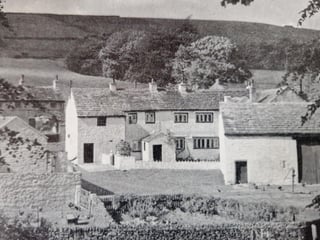
We next look at the impressive Empire Buildings, built by Burnley Council in 1928, which represented a shift in Burnley’s shopping experience.
“The building represents a change between the old domestic retail units and the big national chains which came to the town in the 1920s and 30s,” Roger reveals.
“These were ground-floor shops which had storage accommodation above rather than living quarters. They were very popular shops, some of Burnley’s better firms occupied them. However, in recent years the number of retail units in Burnley has declined, reflected in this building.”
Lodge Square is visited next, and the current Lodge House, now home to office units, but once a spinning mill. The car park in front was once the location of many tiny one-up-one-down houses.
Across we can see the 1910 extension of the once glorious Empire Theatre, another heritage relic hopeful of regeneration.
Roger tells us that the Empire and other theatres in the town including the Victoria saw several London theatre groups decamp here during the Second World War to avoid the Blitz. For a time, then, Burnley was right at the centre of the nation’s theatrical history.
Finally, we look at the old Webster’s electrical store, built on the graveyard of the Bethesda Chapel. Looking from Bethesda Street, we can see the former ‘six-penny’ Woolworths store or bazaar, built originally as a furniture store by Collinge’s.
Across from this is the impressive Marks and Spencer store.