
Bygone Burnley: Ightenhill, with historian Roger Frost MBE
Today’s Bygone Burnley episode takes us to Ightenhill where we uncover lost stepping stones and a medival manor house.
Respected local historian Roger Frost MBE guides us around this pleasant part of Burnley, and uncovers a few secret locations that many people in the town will be unaware of.
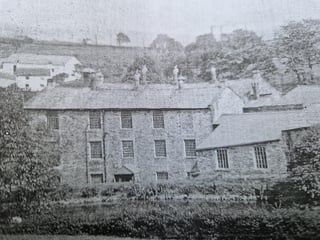
Chief among these is the former Ightenhill Manor House, which featured in a Burnley Express article in 2022, and was located in a field off Helvellyn Drive.
The manor house is even thought to have played host to King Edward II who may have stayed for around a week in 1323 following the Battle of Boroughbridge.

Roger explains in our video that the manor house stood on a ridge in the field. It was where local government was undertaken from at least the 1180s and up to the 1500s. This included law and order, looking after the poor, and disputes between landowners were settled in courts here.
It was also responsible for the keeping of the royal equium, a horse breeding and training centre for military and other uses. The lord of the manor was the head of the De Lacey family, chiefly based in Pontefract, Roger explains.
Our video begins in Ightenhill Park, technically not in Ightenhill, according to Roger.
He said: “The park is only very small, originally over four acres. It was granted to the people of Burnley by the first Lord Shuttleworth in 1908. It was opened in 1912 by the Mayoress of Burnley, the wife of loom-maker Elijah Keighley.
“The park later acquired some more acres. It’s in a very attractive location. Another point of interest is in Ightenhill Park Lane where there is one of the remaining original county borough of Burnley boundary stones.”
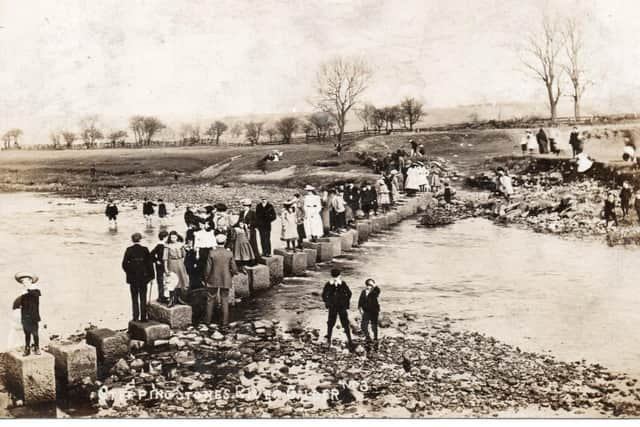
We next travel to the lost stepping stones of Ightenhill, a great attraction in the past. The stones have now been replaced by a bridge which gives access to Pendle Hall Farm, once the site of the home of the Southerns family, associated with the Lancashire Witch Trials of 1612.
Roger says: “The Southerns were one of two families associated with the Lancs Witch Trials. Elizabeth Southerns was known as ‘Old Demdike’. This is quite an interesting area in the history of witchcraft. Elizabeth’s cottage was described as a ‘tumbledown ruin’ even when she occupied it.”