
Bygone Burnley: Billington, with historian Roger Frost MBE
Our Bygone Burnley episode today takes us to Billington, the small neighbouring village of Whalley, in the Ribble Valley.
Despite its relatively tiny size, spread out as it is, Billington has a rich and textured history going back centuries, not least being the location of an ancient battle, fought as far back as 798 AD.
Our video, however, begins at the most reincarnation of a bridge over the River Calder, separating Billington from its near neighbour, Whalley, which was originally a medieval passing place.
Here, respected local historian Roger Frost MBE discusses the etymology of the name Billington, another of those ‘ing’ locations, common in place names around the North-West, stemming from the Old English meaning ‘followers-of’ a particular leader, tribe or group

The ‘ton’ part of the name does not refer to town, Roger points out, but rather to a small community around which was built a fence.
Billington is one of the earliest place names around here, alongside Padiham, originally Pad-ing-ham.
But, battle awaits! The Battle of Billington, or Billington Moor, took place on land near to Chew’s Farm in the village, which saw King Eardwulf of Northumbria defeat a local Saxon noble named Wada and his followers.
Roger speculates that Wada may have been the basis for the name of nearby locations Waddington and Waddow Hall.
“The trees around us are the remains of Billington Wood,” Roger said. “King Eardwulf faced a rebellion from Wada, named in the archives as ‘Dux’, in those days the leading official in Britain after the Romans left.
Wada was described in the Anglo-Saxon Chronicle as being a noble, who was reputed to be involved in the assassination of one of Eardwulf’s predecessors, Æthelred in 796.
Osbald, a likely co-conspirator of Wada, took the throne of Northumbria for just 27 days before going into exile on Lindisfarne. Wada took up arms against the new king Eardwulf and was defeated at Billington. Beyond that, we know little of the battle.
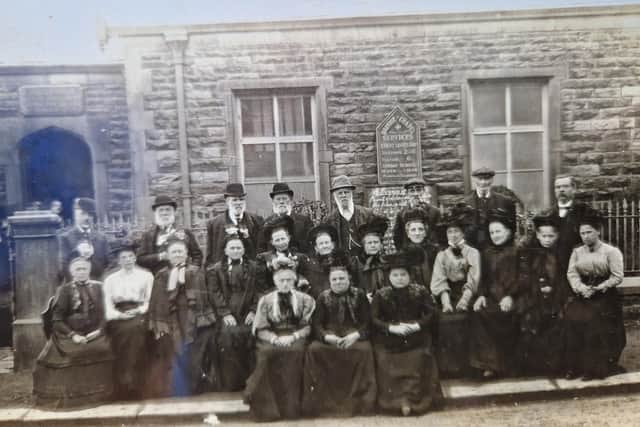
Moving on to more sedate matters, we look at a former Methodist Chapel, built in 1879, by George Foster, a calico printer of Sabden, and partner of the esteemed Richard Cobden. Today, the Ebeneezer Chapel is used as a community hub.
Next we look at the former Judge Walmsley pub, now a nursery, but originally named after the prominent Elizabethan judge and poltician Sir Thomas Walmsley.
Thomas, who amassed a large fortune, originated from Clayton-le-Dale and later built what is now the Dunkenhalgh Hotel in Clayton-le-Moors.
He was involved in the trial of Robert Devereux, 2nd Earl of Essex, who was tried for high treason against Elizabeth I and executed.
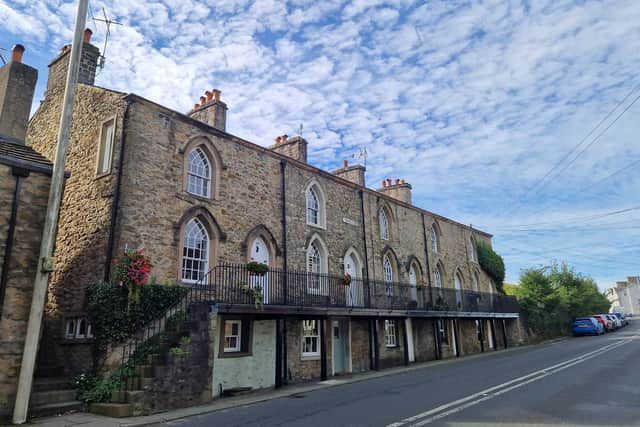
Our video later moves to Painter Wood, an early industrial area of Billington, the site of handloom weavers cottages which still stand today.
Finally, we look at ‘The Marjorie’, a row of cottages on the banks of the Calder, although we don’t know the origins of the name. The building is surrounded by the salix plants, or willow, which produced wicker for baskets for commercial use.