
Forner Claret Clarke Carlisle backs Lancashire and South Cumbria NHS Foundation Trust campaign to kick mental health stigma
Retired Clarets footballer Clarke Carlisle is backing a campaign aimed at destigmatising mental health conditions in a bid to reduce barriers to support.
The popular former defender and now mental health campaigner, has joined forces with Lancashire and South Cumbria NHS Foundation Trust to support its social media campaign which will share seven inspirational stories of lived experience, including Clarke’s own journey.
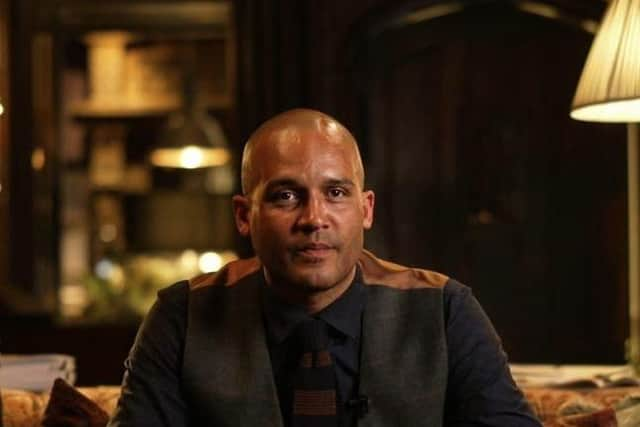

Taking place during Mental Health Awareness Week, ‘the label isn’t my story’ will shine a light on the people behind the diagnoses and celebrate hope, recovery and humanity.
Clarke said: “It’s OK to not be OK was a wonderful campaign. It raised awareness, but it has also entrenched the ‘not being okay’ as the end game. That's not the end game, it's acknowledging that this position is okay and from here I can go and not only get the support that I need, but take action to be well.
“There are support services there to help you to be well and to sustain that wellness. And that's where we need to change the understanding and the narrative with people.”
It comes as two thirds of people say they are still uncomfortable talking about mental health. LSCFT gathered feedback from 140 people and organisations highlighting a belief from 65% of respondents that people are ‘very’ or ‘somewhat’ uncomfortable talking about mental health.
Additionally, participants wanted more awareness for: men’s mental health, neurodiversity, co occurring needs, emotionally unstable personality disorder, psychosis, schizophrenia and addiction.
‘The label isn’t my story’ shares brave and personal stories.
Clarke, who has a diagnosis of recurrent complex depressive disorder, and has also faced gambling addiction added: “My adverse mental health isn't in control of me.
“I have the power, the agency and the ability to change the way that I feel emotions and process them, to change the way that I respond to situations and scenarios. If I was to feel unwell again, we now have the sat nav back to wellness. There’s no fear and I would encourage everyone to reach out to services when they feel that they’re in need.”

Dr Gareth Thomas, chief medical officer and deputy chief executive of LSCFT said: “As a mental health provider, we’re naturally passionate about mental health and treating mental illness but we know that society doesn’t always view it with the same lens as physical health conditions.
“We want to change that, and we see this campaign as just the beginning. By sharing the experiences of our citizens, we aim to highlight just how normal it is to struggle but that help is there and recovery is possible.
“The only way we are going to reduce the stigma is to keep talking about it. I hope these honest stories resonate with the people reading them and that if anyone out there is struggling, they feel empowered to make that first step for support.”
More information about the conditions mentioned in the campaign can be found on LSCFT’s website.
For anyone experiencing a mental health crisis or something that makes them feel severely unsafe, distressed, or worried about their mental health, they can contact their local crisis service by calling NHS 111 and selecting the mental health option.
Alternatively, they can call the Crisis Line on 0800 953 0110.