
Burnley widow shares experience of how it took two years for husband's rare brain disease diagnosis
A Burnley widow has shared her heartbreaking story of how it took two years for her husband to be diagnosed with a rare brain disease.
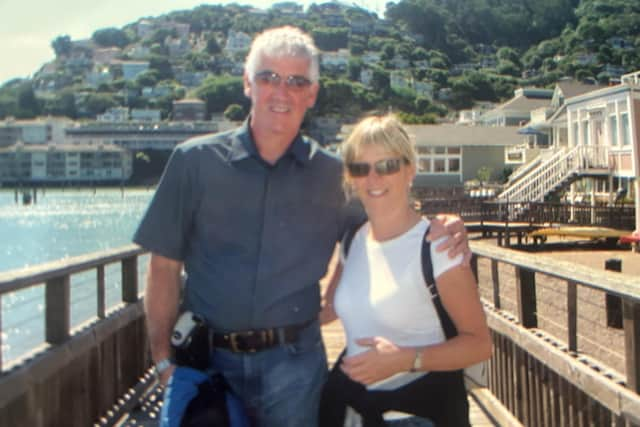
Christine Porter has spoken about her husband Tony’s illness after a charity revealed that diagnoses for brain diseases have not improved in a decade.
A national survey released by UK charity the Progressive Supranuclear Palsy PSP Association (PSPA) has highlighted the continued challenges around diagnosing two terminal neurological conditions.

The survey of 650 patients and family carers identified that diagnosing PSP and Corticobasal Degeneration (CBD) remains ‘critically challenging.’ The data shows that 67% of patients waited two years or more for a correct diagnosis, while 57% were initially misdiagnosed with another condition.
Christine and Tony’s multi-year search for answers began at an ear, nose, and throat department before moving to neurology, where his symptoms were initially dismissed as ‘possible depression.’
Unwilling to accept this, Christine, who cared for Tony for six years until his death in March this year, booked a private appointment with a movement disorder specialist. The specialist recognised PSP as soon as they walked in, a diagnosis later confirmed by a DaT scan.
Progressive Supranuclear Palsy (PSP) and Corticobasal Degeneration (CBD) are two rare neuro-degenerative diseases. They are caused by the loss of neurons in certain parts of the brain. Over time, this leads to difficulties with balance, mobility, speech, vision, swallowing and cognition. Both conditions are life limiting. There is no treatment and no cure.
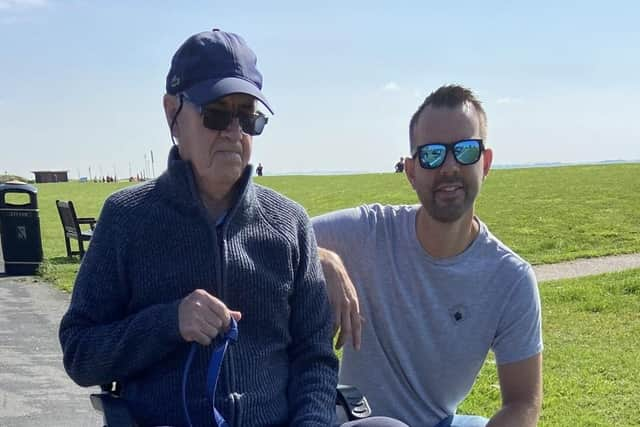
Tony, who was also cared for at Pendleside Hospice, was a conservatory roof fabricator at ultraframe in Clitheroe where he worked for over 20 years until retirement. Full of adventure, Tony enjoyed flying microlites and doing parachute jumps. He also loved fast cars and sailing.
Reflecting on her experience, Chrstine said: “Getting answers to what the cause was for Tony’s falls, dexterity reduction, and speech changes, was frustrating. While the system dragged its feet, my life was upended. Tony had always been the organiser who looked after
me; being suddenly thrust into the primary decision-making role was a steep, daunting learning curve.
“And the challenges didn’t stop once we had a diagnosis. The rapid progression of Tony’s PSP symptoms consistently outpaced the slow-moving nature of service and equipment provision.
“Physio and speech therapy referrals were actioned but the latter exhausted Tony so much that his communication worsened the next day. And when Tony’s mobility sharply declined in late 2023, we ordered a wheelchair but it took six months to arrive.
“Every time Tony’s needs increased, I was forced back into a constant, exhausting admin cycle of re-referrals.”
Christine’s experience of accessing support and equipment reflects a wider national issue highlighted by PSPA’s survey. Because care packages and equipment assessments can take a significant amount of time to clear, an individual’s symptoms often change while waiting.
The PSPA is calling on the government and healthcare leaders to implement four systemic changes which are: to improve early recognition, guarantee a named care coordinator, support family caregivers and introduce anticipatory care.
James Cusack, PSPA CEO, said: “It is devastating that a decade has passed with very little progress in diagnosis times. Behind every statistic is a family living in uncertainty. We are seeing a cycle where symptoms progress faster than the system can respond, leaving family
carers to pick up the pieces. Delays, misdiagnosis, and uncoordinated care are caused by systematic problems which can be improved.”