
Local author provides new insights into the Pendle Witch Trials
John Clayton is an expert on the Pendle Witches and his new book shares the real story of how the greed and religious divisions of the Tudor period led to a century of turmoil. These troubled times saw scrabbling greed for wealth and power while many innocent people were hanged and burned at the stake on false charges of witchcraft and non-conformity.
Within A Pendle Witch and the Dean of Chester, we have a true account of two childhood friends who shared humble beginnings within the East Lancashire backwater of Pendle Forest. John Nutter was a base-born son of the soil whose remarkable social ascent through the Anglican Church saw him serve as personal chaplain to Queen Elizabeth I. Later, he was elevated to the position of Dean of Chester where his expanding wealth and power led to him being named The Bastard of Fortune. In stark contrast, Elizabeth (Demdike) Southern’s narrative is one of struggle and resilience in the face of abject poverty. Her life reflected the harsh realities of an ageing woman who practised a rural heritage of folk healing to feed her family and make ends meet.
Their contrasting stories provide a fascinating picture of the complexities, dangers and contradictions of Tudor and Stuart society where people from both sides of the great religious divide struggled to survive. Dean John Nutter ran Chester Cathedral during the difficult times of burgeoning Puritanism and the Anglo-Irish wars when his city filled with unruly soldiers, insurgents and Spanish spies. He was at the beck-and-call of his boss, the Bishop of Chester who was closely allied with the errant Earl of Essex and coerced Dean John Nutter into a treacherous plot to overthrow the Queen. John’s position placed him in the vanguard of a Protestant southern State and the troublesome pro-Catholic districts of Lancashire and Cheshire. By carrying out his duty (on Government orders) to arrest northern Catholic families he made many powerful enemies.
Within the book are several new insights into the Pendle Witch Trials and the intertwined histories of Lancashire, Cheshire and the Crown. Not least among these is the discovery of a lost gallows site at Lancaster. The place where the convicted were hanged has always been assumed to be Gallows Hill, on the eastern outskirts of modern Lancaster. However, research by the author strongly suggests that a much earlier place of execution existed a little over a stone’s throw from the Castle. Bodies discovered beneath the proposed site possibly included the burials of the condemned.
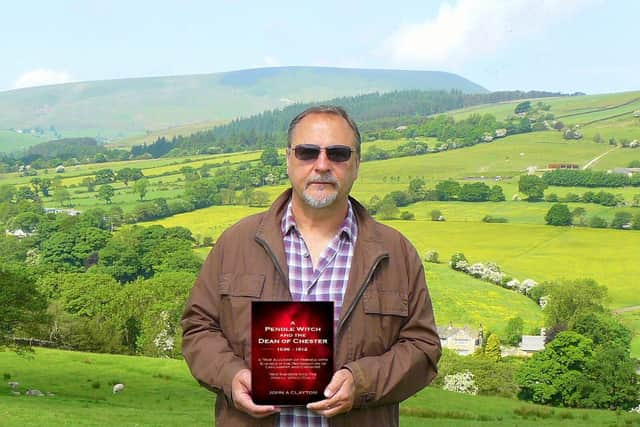

Published by Barrowford Press 30th May 2024
282 pages paperback ISBN 9780957004382
Priced at £11.95 available at bookstores and through Amazon