
Six months of Reform UK in Lancashire: county leader on potholes, cuts, care home closures - and whether he regrets ever getting the job
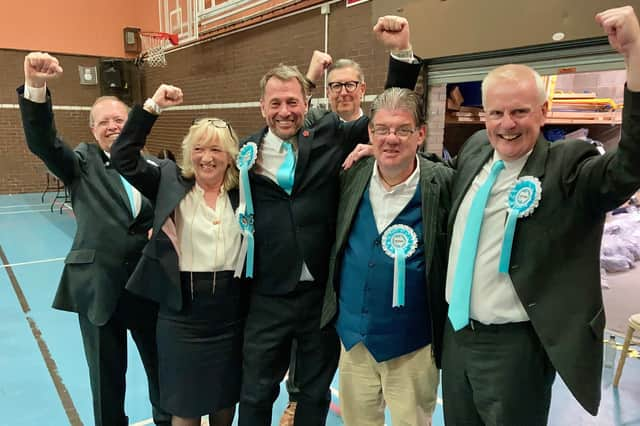
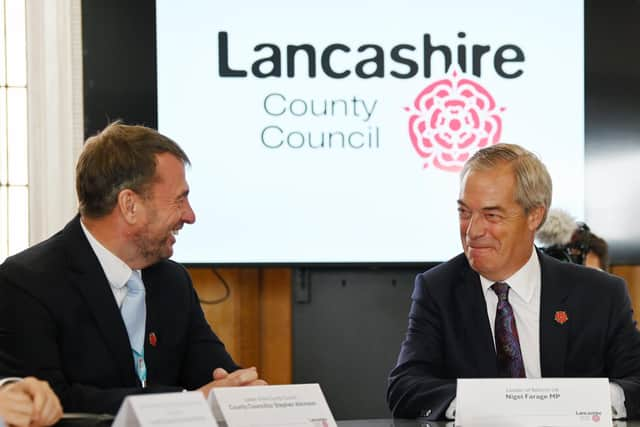
This week has marked six months since Stephen Atkinson was sworn in as the new leader of Lancashire County Council, after Reform UK swept to victory at County Hall in May’s local elections.
The Local Democracy Reporting Service caught up with him to reflect on how the party has used its time in power so far.


You promised that every decision you took would be viewed through the prism of whether or not it benefited the people of Lancashire. What would you say if residents turned to you now, en masse, and asked, ‘What have you done for us in the past six months?’
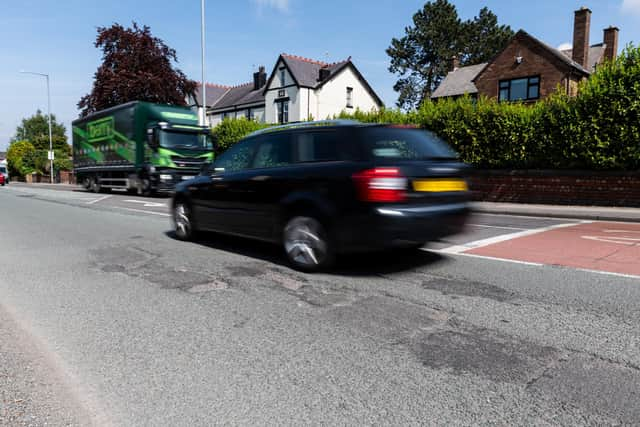
“Road defects, which was the key thing that we stood [for election] on – every four years [they] were doubling. We’ve reduced those by 42 percent. Tens of thousands of road defects have been completed.
“We’ve just engaged [in] an efficiency review that is saving an additional £100m – and that saving is equivalent to £260 for every household with a Band D property. If we didn’t do that, on top of the other £100m [of savings identified as being needed in the last Conservative administration’s budget]…people [would be paying over £500 pounds a year extra in council tax.
“So we are working really hard to deliver more efficient services. We are delivering on the priorities that people want, but we are constrained by ever-increasing demand as a result of government legislation in special educational needs (SEND) [and] adult social care. We have legal responsibilities – we don’t agree with some of them, but we have to do them.”
The efficiency review has so far actually identified only £22m in savings out of the more than £200m the authority needs. Doesn’t that just show that this stuff is really hard – and it would be difficult regardless of the party in control?
“It’s very hard, but we were elected – and we’re determined to do it.”
But yourself and Nigel Farage seemed to present the county council as something of a financial basket case in the run-up to the election – whereas it was just facing the same funding challenges as so many other councils, but unlike many others, it had very healthy reserves to rely on, which would have been the envy of most local authorities.
“I wouldn’t agree with that statement. If you look at the debt in Kent [County Council, which], that is a similar-sized county [to Lancashire], it’s about four or 500 million less [there]. The reason why there’s that difference is that £548m of that debt has been invested into bonds. So if we didn’t have these government and corporate bonds, [Lancashire’s] debt would be similar to Kent – so from £1.2bn, that could have reduced the debt down to about £700m.
“Unfortunately, those bonds – when they were last valued in March – have lost two thirds of the value, so they’re only worth £204 million. So we cannot use those reserves to support the revenue budget, because for every £10m we need, we would have to cash in £30m and take a £20m loss. So…basket case is the wrong [phrase, but] it has huge financial challenges that we do not have access to our reserves – but we are navigating that difficult situation.”
Do you think that you’re going to have to increase council tax by the maximum amount permitted – without government or referendum approval – of 4.99 percent?
“We’re trying not to, but it’s a bit early in that process [to know]. Last year, 17 of the upper tier councils, like Lancashire, that provide those key services required exceptional financial support – that has now risen this year to 26. What I feel many non-Reform councils will do is ask for increases above the 4.99 percent that is the standard cap. We are trying to avoid a 4.99% increase, but we don’t know where we are with that just yet.”
The efficiency review is quite high-level – there aren’t any specifics in terms of services that might be affected. You’re looking at contracts, workforce and issues like automation – they’re quite amorphous for people to get their heads around. Are you saying that they won’t affect the front line – or will only affect it in a positive way?
“Since we came into office, we’ve started to really work on artificial intelligence to help our staff have more capacity. What we will achieve this year is the equivalent of improvements in efficiency of 285 staff – so that instead of employing 285 additional staff to cover areas where we’ve been left in a hole, such as SEND – [where] we have a notice to improve [from] under the last administration [and] adult social care is the same – we’re using artificial intelligence to improve the efficiency of the assessments.”
One of the promises you made in the run-up to the election was that you would put £30m back into the roads budget – if the finances allowed it – that you said was scheduled to be taken out under pre-existing plans. Are the books in a condition that will enable you to do that?
“We will be doing that. We keep our promises – we were very careful what we said we were going to do.”
The Reform UK ‘DOGE’ team – modelled on Elon Musk’s Department of Government Efficiency in the US – never arrived in Lancashire, did they? Doesn’t that show that this idea you needed external people to come in and somehow put things right was never the case?
“The DOGE team in [Reform’s] head office has been really helpful. They helped us understand [an issue with a fall in the valuation of bonds the council had previously purchased] and they’ve also helped us understand the pension fund and how we can reduce…the fees.
“Lancashire puts tens of million pounds in as a contribution to employees’ pensions and that’s fine – and that will keep going. But if we can improve the efficiency of the pension fund by paying less [in] fees out to investment bankers, it means we have to pay less in as a council – and that’s a key piece of work that DOGE have been heading which will save council taxpayers a lot of money.”
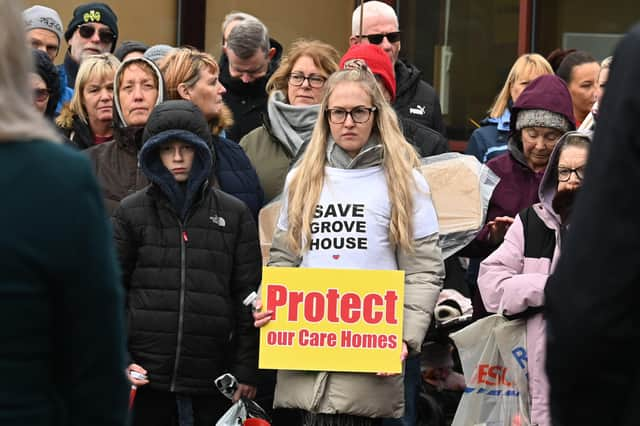
One of the issues that has been hitting the headlines in recent weeks is the review of five of the county council’s care homes and five day centers. While closure is certainly not a foregone conclusion, it is an option, and it’s alarmed a lot of people. Politically, hasn’t it been a misstep, because it’s been a terrible look that people have had these concerns laid at their door?
“We’re very sensitive to the residents – it’s their home and no decisions have been made. But the reason for the review was not just about the cost. [The buildings] have been neglected over many years and need some significant investment, but also they’re costing £4m pounds a year more than what the private sector can deliver, – and the private sector has better quality accommodation
“Three of these five care homes require improvement, according to the Care Quality Commission, One of them requires improvement to be a safe space. So there are significant issues around under-investment in them, around the ongoing efficiency of them and around the care within them.
“When you are in a governance position, you have to look at things…you wouldn’t necessarily want to look at…because you’ve got to govern. But there are a number of issues with these care homes that we are looking at, but no decisions have been made.”
But care isn’t one of the issues, is it? Because even the homes that require improvement overall are rated as ‘good’ for caring and the families seemingly can’t speak highly enough of the care that their relatives are receiving. That’s why they’re so concerned that they may end up in a private sector where the accommodation, as you say, may be better, but the care – that there is no guarantee of. You understand that these are natural concerns?
“I understand. And we had the residents of one of the care homes at the council meeting [last week and] I thank them for coming. We are alive to this situation, but we have to look at this in the round – and we’ll be doing that next year.”
You oppose local government reorganisation, which is this process of abolishing the county council and all of Lancashire’s district councils and creating a handful of new ones to replace them. You wanted a referendum on that from the government, but they said no. However, now you’ve put forward a suggestion for two huge authorities – being described by some of the opposition parties as “mega” authorities – for the whole of the North and the whole of the south of Lancashire. What’s the rationale for that?
“Our position is this should not happen, but we’re in a governance position where we have to make decisions. So I asked the officers to go away and to model all the business cases [for the different number of new councils] that were put forward in Lancashire – and the business case that delivers the biggest financial headroom… was the two [option] – the North [and] South.
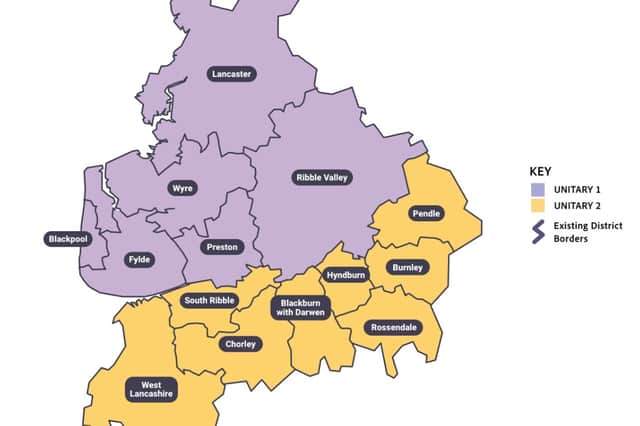
“The reason why that financial headroom is important is [because] in the survey that we did [about reorganisation], people said the things they most cared about were street cleansing, open space, green space – and they’re very local services that are discretionary. So if, if you don’t have a council with the financial headroom, it’s my opinion that you’ll see parks closed [and] street cleansing neglected, because all the money will be spent on social care and SEND. So what this model did was give the most financial capacity to maintain those services that residents wanted.
“But fundamentally, we are changing the governance of how the council will be run. So although the [proposed new councils seem to be big]… most of the decisions will be taken by area committees, which are very close to the people. So it will have that advantage of local decision making with the strategic size needed to deliver these very complex areas such as special educational needs and adult social care and children’s services.”
Something else you famously don’t want to do is have an elected mayor of Lancashire. But it looks like it’s coming, come what may, as the government could impose one next year. You’ve just run out of road to stop them, haven’t you?
“Personally – and this is not the decision of the Reform group – but I’ve said for many years [that]to put all of that power into one person who makes all the decision-making on strategic spending, will actually mean that spending is directed to the population centers where there’s the most votes, just because of the political nature [of the post]. If that person is aligned to central government, they will also have that alignment of [party] reselection for the mayor [to consider] going forward.
“So I don’t think that mayors help with devolution. I think it doesn’t devolve power, it centralises power. So intellectually, I’m against it. But if the government wish to impose it, they can, they can do that.
“But what I would say is we’ve asked the government to confirm what money we will get – and they’ve given us a response that doesn’t quantify what we will get.
“One of the things that doesn’t get discussed about a mayor is a mayoral precept, where…every council taxpayer will have to pay a fee to support the mayor’s office – and that’s a cost on families.
“So I don’t think it’s as simple as [saying], ‘This is really good – and let’s do it.’ It’s going to be discussed in the round and we’re part way through that process.”
You’d probably admit that this time last year you would never have expected to be in the position that you’re in now. You were about to step down as leader of Ribble Valley Borough Council – having led the authority as a Conservative for six years – and you’ve now ended up with one of the toughest jobs in the local government. Do you ever regret that?“
No, it’s incredibly rewarding – it’s tiring, they’re long days. I [also] head up Reform UK at the Local Government Association. I’m working very hard, [but] it’s a great honor – and we really believe in what we’re doing.”
***Note, some of the questions as shown have been slightly reworded for brevity and flow in written form, and the answers abridged for the same reason – but can seen exactly as asked and answered in the video of the full interview playing beneath the headline of this story.