
Burnley and Pendle residents give verdict on 'monster' East Lancashire council
Four in five residents across Burnley and Pendle say that if their local councils are to be axed, they should be replaced with one that covers no more than half of East Lancashire - in what one leading politician has described as a rejection of any plans for a "monster council" for the area.
According to the results of a survey undertaken by the two authorities, the vast majority of locals would prefer the creation of a new council just for Burnley, Pendle and Rossendale.
The existing Pendle and Burnley councils have already backed that option - which would see the establishment of an authority serving 272,000 residents - as part of a forthcoming shake-up of the council landscape in Lancashire.
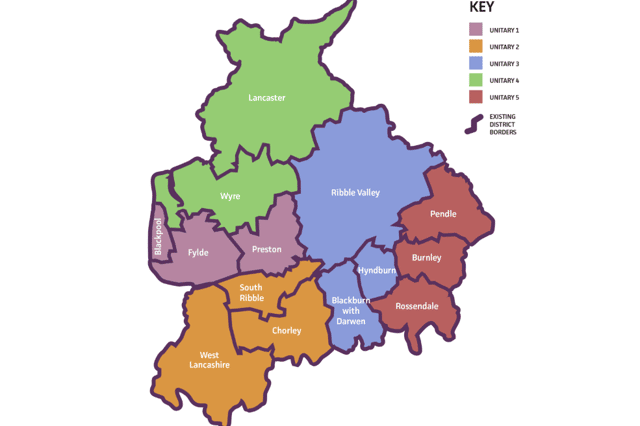

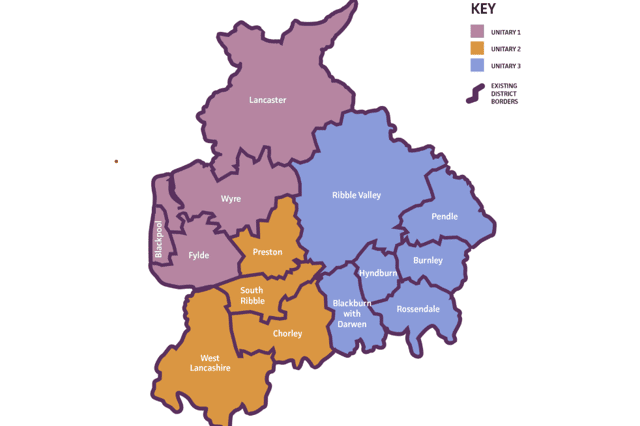
However, Rossendale, Blackburn with Darwen and Hyndburn councils all support a tie-up that would bind together the whole of East Lancashire - themselves, Burnley, Pendle and also Ribble Valley. That would result in the formation of a local authority made up of what are currently six individual council areas, covering a population of 586,000 people. Meanwhile, Ribble Valley wants to join forces with Preston and Lancaster.
Burnley Council leader Afrasiab Anwar has been vociferous in his opposition to any arrangement that would “lump” together Burnley and Blackburn with Darwen, describing it as “absurd” to combine two places with a longstanding rivalry and which have “fiercely defended their identities for generations”.
In the Burnley and Pendle survey, 81 percent of 1,491 residents who responded favoured the three-way merger between the two areas and Rossendale. There was greater strength of feeling in Pendle, where the proportion was 88 percent, compared to 65 percent in Burnley - but nevertheless a clear majority in both places. In Burnley
Pendle Council leader David Whipp said local people had chosen the ‘Goldilock's zone’ of a new local authority that was “just the right size”.
He told the Local Democracy Reporting Service: “It supports our view that whatever councils we get, they need to be as close as possible to people and not remote mega - some would say monster - councils that people cannot relate to and where the councils themselves cannot relate to local townships and neighborhoods.
“Our proposal [gives] a sensible ratio of elected representatives to residents. The government wants power to be in as few hands as possible, but as a pluralist, I denounce that - there ought to be local representatives reflecting local views on their local council.
“The Burnley/Pendle/Rosendale option] would keep local government local and create agile councils able to innovate and improve services, ensure a fair share of resources across Lancashire and be the best size to tackle the crisis in social care,” Cllr Whipp said.
In total, the Burnley and Pendle survey attracted 1,617 responses, which, as well as residents, included council employees, business owners, charities and community groups. Around two thirds of resident and business owner respondents came from Pendle.
Across both areas, at least a 74 percent of responses in each category backed a merger of Burnley, Pendle and Rossendale.
That option would lead to the creation of a total five new councils across Lancashire to replace the 15 that currently exist, all of which - including Lancashire County Council - are set to be abolished within the next three years under a move ordered by the government to simplify the local authority structure in so-called ‘two-tier’ areas like Lancashire.
The replacement councils would be responsible for delivering all local services within their area, ending the division between the county council - which oversees major services such as social care, road repairs and education across most of Lancashire - and the 12 district authorities, including Pendle and Burnley, which look after the likes of local parks and bin collections and decide upon most planning applications.
The new ‘unitary’ authorities would be based around the standalone council model that already exists in Blackburn with Darwen and Blackpool.
Lancashire’s councils are preparing to submit to the government what is likely to be five different options for the number and shape of those new authorities by a deadline of 28th November. Ministers will then decide which of them should be put to the public in a formal consultation next year ahead of determining which one should ultimately be implemented in April 2028. Currently, only Burnley and Pendle have come out in support of a five-council option.
The government has said its preference is for the new council areas to be based around populations of at least 500,000 people. However, ministers have also indicated that they would be flexible over the population figure in order to enable the creation of councils that make sense for a particular locality.
The Burnley and Pendle proposal has already passed a crucial early test, with confirmation that it meets all six criteria set out by the government for the shake-up process, which is known as “local government reorganisation”.
Cllr Anwar said of that outcome that he was “delighted, but not surprised”.
“Our officers have worked tirelessly to put together a proposal that not only meets the criteria, but reflects the ambition and identity of our communities. We’ve taken off the straitjacket of outdated structures and put forward a plan that’s bold, financially sound, and focused on delivering real outcomes.”
He also thanked the public for their support following the survey outcome, telling them the bid is “as much yours as it is ours”.
Cllr Anwar added: “Thank you for standing with Burnley and believing in our future. Now it’s up to the government to make a choice, but we’ve put together the best bid, both in terms of value for money and in protecting the unique identities of our communities.
“It’s the only bid that truly makes financial sense - it delivers savings, protects services, and ensures that local voices remain at the heart of decision-making. No other proposal comes close to matching that.”
Good things come in small packages...?
These were the most common themes cited by survey respondents supporting a Burnley/Pendle/Rossendle merger:
***a preference for smaller, local councils - belief that smaller, more locally focused councils will better serve residents;
***preserves local identity - concerned about potential loss of local identity if merged into larger councils;
***opposed to merging with Blackburn with Darwen - fear of being dominated, loss of funding and local priorities being ignored (more common amongst Burnley respondents [second most important issue] than those in Pendle [fifth most important issue]);
***better connection to residents - smaller councils are more in touch with residents' needs;
***potential loss of voice and representation - concern that larger councils will dilute voice of smaller councils, making it harder for residents to be heard and for local issues to be addressed
...or big is beautiful?
These were the most common themes cited by survey respondents supporting the creation of a larger replacement council:
***economies of scale and financial sustainability - comments emphasise that larger unitary authorities can achieve better economies of scale, reduce costs, and ensure financial resilience; some feel smaller councils may struggle with funding and service delivery;
***maintaining local identity and representation - whilst there is concern about losing local knowledge and maintaining a local voice, there is a balance sought between being 'small enough to care, big enough to matter';
***geographical logic and community cohesion - comments focus on the importance of logical boundaries that reflect existing communities, shared identities and common issues; keeping East Lancashire together is a recurring theme;
***service delivery and efficiency - a focus on the ability of different models to deliver services effectively - respondents worry too-small authorities may lack capacity, while too large ones may lose touch with local needs.
Source: Burnley and Pendle councils