
Milltown Brothers’ Simon Nelson on signing with A&M, Valve & Blue Peter appearance
Once touted as one of the brightest bands on the UK independent scene, the Milltown Brothers have experienced the highs and lows of the music industry in the years since their formation. Ahead of their back-to-back shows at Barnoldswick’s Music & Arts Centre, I sat down with the band’s guitarist Simon Nelson for a two-part interview.
After releasing their ‘Coming From The Mill’ EP in 1989, featuring the singles ‘Roses’, ‘Something On My Mind’ and ‘We’ve Got Time’, the five-piece from Colne were tipped for stardom by the NME in the 1990s. “All those recordings were made there at Strawberry Studios in Stockport and they put together an independent record label called Big Ram Records,” Simon Nelson, the Milltown Brothers’ lead guitarist, remembered.
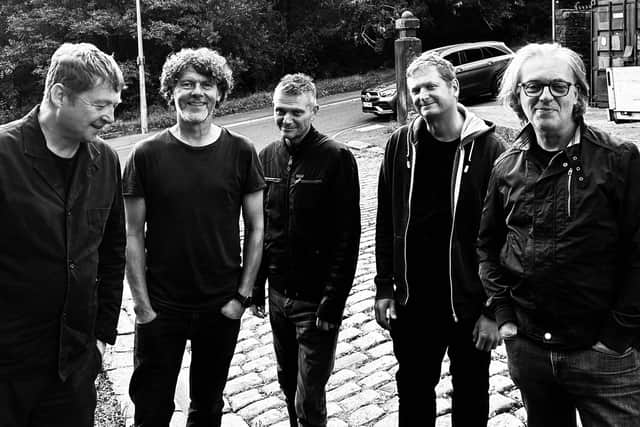

“And that was our first foray. We signed a publishing deal with EMI and this was a great vehicle to obviously promote us on vinyl and then go out and tour. So it was really exciting. There was one particular moment I remember for that. We were touring somewhere, I think in Cardiff and there was another band in the dressing room next door and they had music on and it was Roses. And we thought, well, why are they playing that? And we asked them, it was on radio, so that was amazing. The first time we were on radio one, so that was a really fun memory,” Nelson added.
Success followed soon after for the Lancashire five-piece after their single - ‘Which Way Should I Jump’ became a top 40 hit and subsequently sparked a bidding war with several major labels, leading to the band signing with A&M Records in 1990.
“I think Polydor was really interested. A&M showed a significant interest and paid for some demos for us. And then Atlantic (Records) came in. And by the time we had, we were down to two, two quite important offers. And we had to make a choice between A&M and Atlantic,” Nelson said.
“I think really it was our management company that was keener for us to go with A&M because it was a UK based offer. Whereas Atlantic had been an offer from the States. And so managing that relationship seemingly might've been easier. Who knows if we'd have gone with Atlantic, if we would've got further, we might've gone and recorded in the States and we might've had a bigger presence in the States than we ended up doing. It's one of those, um, you know, initially it went very well with us with A&M. It's just that maybe in the States they didn't have as much presence as maybe Atlantic. So you never know. It's one of those things, could've gone either way,” Nelson finished.
The band’s critically acclaimed debut album
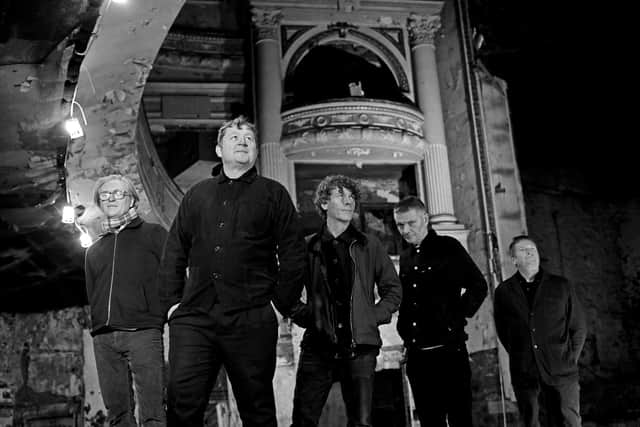
Soon after, the band released their acclaimed debut album - ‘Slinky’. The album, produced by Dave Meegan, who had worked on U2’s albums ‘The Joshua Tree’ and ‘Rattle & Hum’, peaked at No.27 in the UK’s Official Albums Charts. Described by Q Magazine as "Byrds with hard-edged contemporary pop and upfront vocals,” the Milltown Brothers were flying high. The album’s success came around the same time they’d began to receive national attention, becoming one of the few bands to perform live on Blue Peter and ‘Here I Stand’ was used as the theme tune for ‘Preston Front’.
“We weren't sure whether that was such a good idea to do that (playing on Blue Peter), but we ended up being one of the only bands ever to play live on Blue Peter, so I guess it's some form of accolade,” Nelson said. “But a lot of people did take the mickey out of us a bit for doing that, but things like going on Wogan and going live because the record was getting some presence in the charts, it enabled the record label Pluggers to position us on well-known TV programmes. So that, that was, it all comes with it if you're getting a bit of success and that, that was fun to do that,” the guitarist finished.
However, after a period of bad luck, issues with A&M Records, the delayed release of their second studio album - ‘Valve’ and the meteoric rise of grunge music, which saw the likes of Nirvana, Soundgarden, Pearl Jam and Alice in Chains, all receive mainstream attention. As a result, ‘Valve’ failed to reach the same heights as ‘Slinky’ and subsequently saw the Milltown Brothers leave A&M towards the end of 1993. But what does Nelson believe caused their momentum to stall?
“The release of Slinky was in March 1991 and Valve didn't come out till August 93, so you're looking at quite a period there and I think that gap reflects the difficulty that we had in convincing the record company that we had the right songs for the second record,” Nelson stated.
“They dismissed a lot of our songs and I think it culminated in us lacking confidence in the songwriting and going around in circles trying to write a type of song that they wanted us to write, rather than allowing us to sort of develop naturally, as we were at the end of 1991. And some of the songs that you'll see on the reissue of Long Road were the ones we wrote at the end of 1991 that were kind of rejected by the record label, but that showed a kind of progression that, uh, where we wanted to go. So yeah, I'm afraid it was one, a classic example of second album syndrome and the record label not believing in this bunch of songs.
“And this also, at that time, music was very much changing. Nirvana had become successful, so grunge and heavier guitar sounds were coming in and our sort of guitar pop that had been successful on Slinky was, was not as much in favour, so we had to adapt and we weren't adapting perhaps as quickly and as, as seamlessly as other bands, uh, were at the time,” Nelson finished.
The aftermath
After A&M’s decision to drop the Milltown Brothers from the label, the band continued to tour to promote the album towards the backend of 1993, but Nelson admitted that it felt like that the wheels had started to fall off. “I think Barney (the keyboardist) had enough, he wanted to go on and pursue different musical avenues. So he left the band at the end of 93. Then in 94 and 95, we tried to continue in London under various guises,” the guitarist said.
“It really ended up with me and Matthew sort of like, with a couple of other guys playing this random gig down in Canterbury in 95 sometime, and realising that we hit the buffers, and it was the end of the line for a bit. So we had a break for a couple of years, but we did reform with a band called Milo at the end of the 90s, when Nian came back on board, and somebody called Steve Taylor came and played bass with us.
“And at the time, Barney would be playing either with The Rubbish, I think it was, and James was playing with his band, The Show Ponies. So everyone had their own things. And then I don't know, in 2002, after we all had kids, we started to write together and came up with Rubber Band in 2002,” Nelson finished.
Subsequently, the Milltown Brothers released ‘Rubberband’ in 2004, but it would be another decade before the band released their fourth studio album - ‘Long Road’, which will be a big part of their shows at Barnoldswick’s Music & Arts Centre this weekend.