
'Major step forward' - Lancashire crime comissioner welcomes over-70s driver eyes tests after local tragedies
Lancashire’s Police and Crime Commissioner has welcomed the Government’s new national road safety strategy - following the deaths of four local pensioners linked to drivers’ poor eyesight.
This week the Government announced that as part of its new Road Safety Strategy, it was consulting on mandatory eye tests every three years for drivers over the age of 70.
It comes after former senior coroner for Lancashire, Dr James Adeley, sent a report to Transport Secretary Heidi Alexander to say action should be taken to prevent future deaths. Dr Adeley was concerned that enforcement of visual legal standards for motorists is "ineffective and unsafe" and he labelled the licensing system as the "laxest in Europe", pointing out that the UK was one of only three countries to rely upon self-reporting of visual conditions affecting the ability to drive.
Since the summer, Commissioner Clive Grunshaw has also been engaging with the Government and the DVLA, pressing for stronger medical fitness-to-drive rules and mandatory reporting by healthcare professionals. He has highlighted the need to close dangerous loopholes and ensure that those unfit to drive are identified before further tragedies occur.
What happened to the Lancashire pensioners?
- Marie Cunningham, 79, and Grace Foulds, 85, were struck while crossing Lulworth Road in Southport by a Tarleton driver with severe bilateral keratoconus. Despite being warned in 2019 that his vision failed to meet legal standards, he continued driving and retained a valid licence through non-disclosure.
- Anne Ferguson, 75, died following a collision with a van near her home in Whitworth. The driver had suffered from bilateral cataracts for 8–12 years. He attended a visual assessment shortly before the crash but falsely claimed he did not drive, thereby avoiding medical advice to stop.
- Peter Westwell, 80, was killed in Langho, near Blackburn, by a driver with a history of retinal detachment and macular degeneration. Despite multiple clinical warnings, the driver misrepresented himself as a non-driver and renewed his licence without disclosing his impairments.
Other issues
Other measures announced in the new Road Safety Stratefy include targeting the growing problem of illegal number plates, a cracking down on uninsured drivers and vehicles without a valid MOT, and a consultation on lowering the drink drive limit in England and Wales.
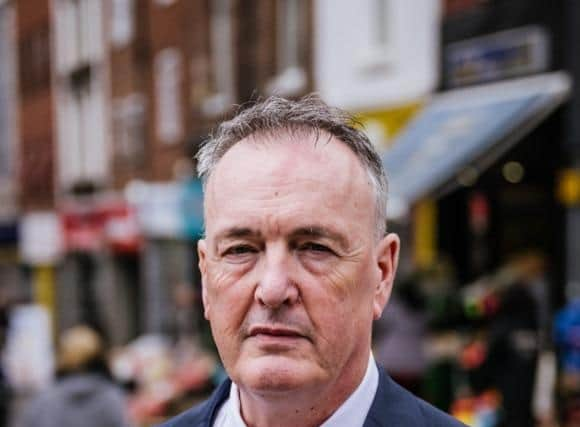

The Commissioner has pledged to continue working closely with Government and local partners to ensure the measures are implemented effectively and deliver meaningful improvements for Lancashire’s communities. He also welcomed additional proposals within the strategy, including lowering the drink-drive limit in England to match Scotland, penalty points for not wearing seatbelts, and cracking down on illegal number plates, uninsured drivers, and vehicles without valid MOTs.
Mr Grunshaw said: “These proposals are a significant step forward in making our roads safer. In particular, we have seen first-hand the devastating consequences when drivers continue to use the roads despite serious medical conditions or failing eyesight. These measures aim to reduce deaths and injuries involving older drivers, without unnecessarily restricting their mobility and personal freedom. Ensuring regular eyesight tests for older drivers is a major step forward in improving public safety and preventing avoidable tragedies.
“Since the initial announcement in August, I have been engaging with Government and the DVLA to ensure these changes are robust, workable, and focused on public safety.
"Introducing regular eyesight testing for older drivers, reviewing drink-drive limits, and improving vehicle safety will support the work police teams do every day to keep Lancashire’s roads safe.
"The focus on younger drivers and motorcycle safety is also a positive step, given these are some of our most vulnerable road users.
"The success of this strategy depends on strong partnerships, and I will continue to work with Government to ensure these proposals lead to real, lasting change. Our priority is keeping people safe, whether they’re walking to school, cycling to work, or simply crossing the road near their home.”
What our readers said
Readers generally backed the Government’s eye test plans, with many even urging them to go further.
Jackie Cooney said: “All adults should have a eye test I think every year, eyesight can change within a year.”
Mike Phillips said: “You shouldn’t be able to renew your license at any age without a full retest with the current Highway Code, including sight test.”
Susan Breen said: “All drivers regardless of age should have to have regular eye tests, maybe every two to three years.”