
Public meeting in Colne hears strong opposition to proposed Calderdale Wind Farm
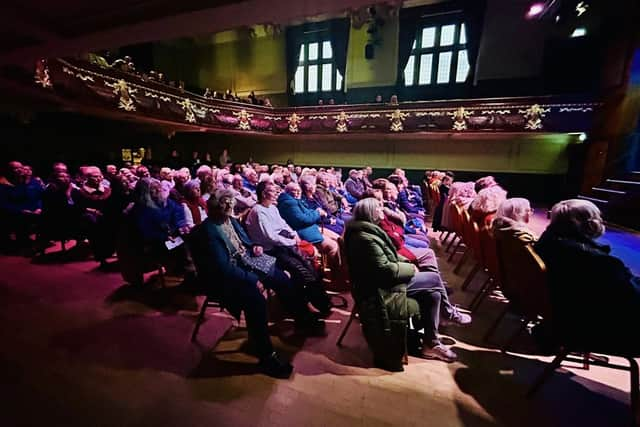
Residents from Colne and Laneshaw Bridge gathered at Colne Muni this week to voice growing concerns over the proposed Calderdale Wind Farm, with campaigners warning of significant environmental and community impacts.
The meeting, attended by local residents, campaigners and environmental advocates, focused on plans by Calderdale Wind Farm Ltd to construct what would become England’s largest onshore wind farm on land at Walshaw Moor Estate, close to Hebden Bridge.
The development, described as potentially the largest onshore wind farm in England, could include dozens of turbines reaching heights of up to 200 metres; around 42 metres taller than Blackpool Tower.
Campaigner Paul White addressed attendees, highlighting the potential scale of disruption to surrounding communities. He warned that construction could bring an estimated 62,000 additional heavy goods vehicle (HGV) movements through the area.

“Residents of Colne and Laneshaw Bridge need to understand what this will mean,” he said. “In Laneshaw Bridge, traffic controls will likely be in place for up to two years to allow wagons onto a new access road. It doesn’t take long for congestion to build through the village, and this will impact access to homes and businesses.”
Mr White also raised concerns about air quality along North Valley in Colne, which is already designated an Air Quality Management Area due to elevated nitrogen dioxide levels.
“This pollutant is a serious respiratory irritant,” he explained. “It can worsen asthma, reduce lung function, and increase long-term risks such as chronic lung disease and cardiovascular problems. Adding frequent HGV traffic will only make matters worse.”
Nick Mackinnon from Stronger Together to Stop Calderdale Wind Farm also gave a presentation on the impact on Colne, Laneshaw Bridge, and East Lancashire as a whole.
According to figures presented at the meeting, residents could see at least one additional HGV passing through Laneshaw Bridge every three minutes for a period of around 16 months. Campaigners suggested the real figure could be even higher.
Beyond traffic and air quality, environmental concerns were a major focus. The proposed development would cover approximately 10 square miles of moorland, including peatland habitats known for their ability to store carbon.
“Peatlands can store up to 30 times more carbon than rainforests,” Mr White said. “Damaging them in the name of green energy simply does not add up.”
The site includes several protected areas, with parts designated as Sites of Special Scientific Interest. Local ecologists have also warned of potential impacts on bird species such as curlew, lapwing and golden plover, all of which are considered to be of conservation concern.
The land is owned by local businessman Richard Bannister, associated with Boundary Mill, and stretches into an area valued for both its natural beauty and cultural heritage.
Residents are also concernedkj about the potential effect on the landscape known as “Bronte Country,” which extends towards Wycovcller, an area popular with visitors and closely linked to literary history.
The meeting concluded with calls for greater scrutiny of the proposals and increased community engagement before any decisions are made.
Further consultations are expected as the plans progress.