
Dr. Feelgood’s Kevin Morris: “We’d rather have something than nothing”
Fresh off a trip to Helsinki, Finland, Dr Feelgood’s drummer, Kevin Morris, sat down with the Express over the phone to discuss their upcoming performances at Barnoldswick’s Music & Arts Centre on Sunday.
As a collective, Dr Feelgood are a band with 55 years of history, dating all the way back to 1971. Dr Feelgood was launched with the initial lineup of Wilko Johnson, vocalist Lee Brilleaux, bassist John B. Sparks and drummer John Martin and was immediately thrust into the category of a pub-rock band, something that Morris felt was quite misunderstood.
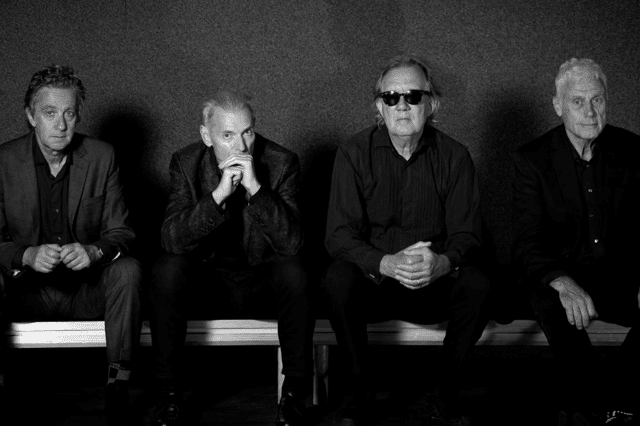

“It just so happens that when the band started, they were playing in pubs,” Morris explained. “It was a bit of a circuit at the time in London, which was started by a band called Bees Make Honey, who went into a pub and said, 'Can we come and play here once a week?'" And the public had said yes. And so they started a residency, and other bands followed suit. A pub scene evolved.
“But I think when people refer to pub rock, it kind of is. I think it's almost suggestive of a style of music or a type of music because all the bands were totally different. Bees Make Honey was a gentle American country band, whereas Dr Feelgood were quite frantic, very much from Essex, and we're very much a rhythm and blues band,” Morris finished.
How they maintained the classic Feelgood energy?
The band has routinely evolved throughout the years, changing lineups with semi-regularity. Johnson departed the band in 1977, and Sparks and Martin left in 1982, leading to Brilleaux’s decision to disband the band. However, it was a decision that lasted for just three months after Chris Fenwick, the band’s manager, persuaded Brilleaux to relaunch Dr Feelgood, subsequently leading to the arrivals of Gordon Russell, guitarist, Phil Mitchell on bass and Morris as the new drummer. But how did the new line-up manage to preserve that classic feel-good energy with what was more or less an entirely new line-up on ‘Doctor’s Orders’?
“We had been out on the road for a good six months, playing virtually every night in those days before we went in the studio. But we had wanted to do a studio project, and I listened to some of the earlier Dr Feelgood albums, and I said, ‘I like the sound of Let It Roll,' which was produced by Mike Vernon, a classic producer from the 60s,' he shared.
“He had his own record label called Blue Horizon, and he did all the early Fleetwood Mac stuff when Fleetwood Mac were a blues band, you know. So we went to his studio in Chipping Norton, which was a residential studio, and we went up there and lived in the studio, which was very, very nice. And we put the album together, and it was very well received at the time. And it kind of just gave us a sort of a new lease of life,” Morris finished.
The period between 1983 and 1989 was a successful one for Dr Feelgood 2.0, but soon after, lineup changes took over. Mitchell stepped down briefly due to touring fatigue in the early 1990s, Russell left the band due to personal circumstances in 1989, and Brilleaux’s death in 1994 left questions over whether the project should carry on, according to the band’s drummer. “When Lee died, I actually thought that we wouldn't carry on,” Morris admitted. “But inevitably, it took about a year of people contacting the office agencies, promoters, and fans, saying, 'Look, you should do something.'" We'd rather have something than nothing. And I was still sceptical. We tried a few people out, and they were good, but not right. And then a guy called Pete Gage came along, and it felt like a band. It felt like Dr Feelgood,” Morris concluded.
Gage, accompanied by Mitchell and Morris, remained as lead vocalist of Dr Feelgood for four years before an internal dispute ultimately led to his departure in 1999, and he was subsequently replaced by Robert Kane, who the band encountered at several festivals with The Animals. Morris gauged Kane’s interest, and much to his surprise, Kane was interested in joining as lead vocalist – a position he’s held for 27 years now.
For Morris, who is the longest-serving member of Dr Feelgood, he has performed with all three frontmen – Brilleaux, Gage and Kane – but what is the biggest difference between Kane and Brilleaux? “Lee was a very good showman, as is Robert, but he's completely different. He didn't go out to try to copy Lee,” Morris stated. “He hasn't watched lots of videos of Lee or anything like that. He's his own man, and that's what we liked,” Morris closed.
The return of Gordon Russell
After a three-decade absence from Dr Feelgood, Russell made his return to the four-piece in 2021 as the band returned to the road following the coronavirus pandemic. However, Russell’s return came after a bizarre, almost sitcom-like saga.
“As we were coming out of the pandemic, there were a few shows that were going to happen. There was a little festival in the UK and a couple of other things that were actually going to happen. And I found Steve, our guitar player, and he said, Well, I can't do the one in July because we're on holiday with the family,” Morris revealed.
“I said, Well, I'll see if Gordon's about because Gordon had stepped in previously when Steve had been on holiday. Then we were doing a club tour of Spain, and he didn't want to play in clubs because he might get COVID. And then he didn't want to do the one weekend in October that it was in and been in the book for years because he was on holiday again. And I thought this is ridiculous, and I spoke to Gordon, and Gordon said, 'Well, I'd like to come and do it.' But if I come back, I'm going to have to close my guitar school. In fact, he's passed it on to somebody else.
“He said, so I'd want it to be permanent. I discussed it with Robert and Phil, and we all agreed that we'd get Gordon back on a permanent basis. So I phoned Steve and put that to him. He wasn't best pleased, I don't think. It was a very short conversation. "But he was with us a long time, Steve, over 30 years,” Morris concluded.
Russell’s return reinvigorated the band. The guitarist struck up a great relationship with Kane and it ultimately paved the way for a new era for Dr Feelgood. Russell provided the riffs, Kane provided the lyrics, and as a four-piece, it provided them with the opportunity to work on ‘Damm Right!’ - their first studio album in 16 years at that point, something that came down to an internal reluctance from one member. “Steve didn't want to do one,” Morris revealed. “He just didn't want to go and do a Dr Feelgood album. He was happy to do the live work, but he didn't want to go and make an album.
“Robert's had loads of lyrics. Gordon's always got riffs, and the pair of them just sort of wrote an album. And then we went and recorded Damn Right. It was a good experience, and then we put out a live album last year as well with Gordon.
“So since he's been back in the band, we've done a studio album. We've done a live album. We've done a couple of videos. It's just a sort of feeling of moving forward again rather than just stagnating. And I think that's really what was happening. I think because Steve didn't want to go in the studio, he didn't want to do this, he didn't want to do that and ended up, he didn't want to come on the road, which is where we live,” Morris finished.