
Bellowhead’s Jon Boden interview: Hedonism, post-apocalyptic album trilogy & Bellowhead
Ahead of his performance at Barnoldswick’s Music & Arts Centre this evening, Bellowhead’s Jon Boden took time out of his schedule to discuss his successful partnership with John Spiers, the success of Bellowhead’s album ‘Hedonism’ and working on scores for Royal Shakespeare Company productions.
The performance at Barnoldswick’s Music & Arts marks the first of three solo dates for Boden, who is set to perform at the Ely Arts Festival and What A Wonderful World Festivals later this month. The decision to hold three solo dates comes after Boden concluded a touring run with the Remnant Kings last month. “I've got into the habit of just moving between different lineups basically every kind of six months or something,” Boden said when asked the reason behind holding a number of solo shows.
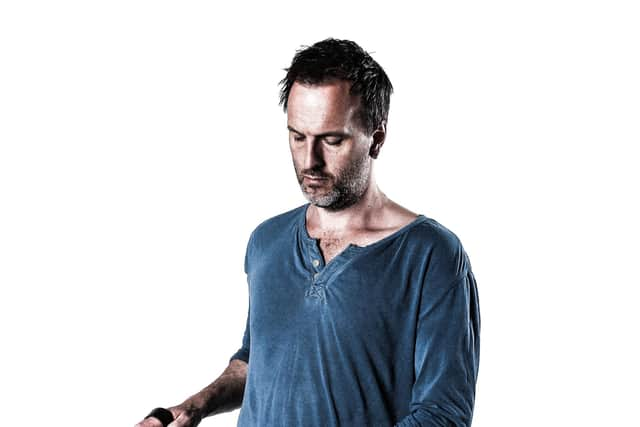

“I really like doing it because you kind of spend enough time doing one thing that you get into the swing of it and, you know, get into something nice about doing a run of gigs in a particular lineup. But then swapping to another lineup means that it's been really exciting moving back to another thing, if you know what I mean. "So basically, variety is the spice of life, and that's what I've ended up doing,” Boden finished.
“Variety is the spice of life" is a quote that has certainly followed Boden throughout his professional career to date, particularly after meeting his long-time friend and collaborator John Spiers at a pub in Oxford in 2000. The pair launched the duo of Spiers and Boden, swiftly drawing attention on the folk club and festival club circuit for their sound, which blended traditional song with a fiddle, guitar and stomp box, amongst other things. But what made the duo of Spiers and Boden so successful?
"I think maybe it's that we were both doing slightly different things when we met. "So I was very focused on English folk songs and trying to do sort of interesting stuff with English folk songs, but within a strong sense of the tradition of English folk singing,” Boden recalled. “And John was doing the same, but with English folk tunes, you know, so I wasn’t particularly focused on English folk tunes, and he wasn't particularly focused on English folk songs.
“So actually the two things came together very well, you know. And we sort of both had similar attitudes to what we wanted to do, but we were coming at it from slightly different angles. So I think those two things came together very well,” the Bellowhead frontman finished.
The formation of Bellowhead
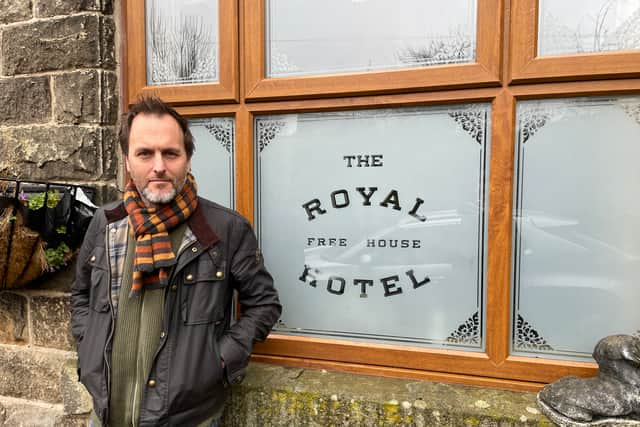
After four years of performing alongside Spiers, it was in 2004 when they had their greatest creation yet. While stuck in a traffic jam, the pair were left listening to the music of La Bottine Souriante, a French-Canadian band, who started off as quite a traditional band, playing traditional cable choir music, and then they gradually expanded and added a brass section. Subsequently, Bellowhead – a band that became a pioneering and trailblazing force within the contemporary British folk scene – was born inside a car.
Bellowhead broke away from folk’s traditional acoustic, solo-orientated approach, creating an 11-piece lineup that featured a brass, strings and percussion section. Spiers and Boden were joined by band members who were capable of playing 20 instruments proficiently, and they created a massive, genre-defying sound. The band’s first album – 'Burlesque' – featured sounds from the Napoleonic Wars, the American Minstrel Movement and sea shanties from Brazil.
“We had quite a specific aim when we launched, which was about wanting to headline English folk festivals playing English folk music,” Boden said when reflecting on the launch of Bellowhead. At the time, there were lots of English folk acts that were playing at the English folk festivals, but generally speaking, the headliners weren't English. They'd get a Scottish headliner in or an Irish headliner or a French-Canadian headliner or whatever. All brilliant bands were fans of all these headliners.
“But it was like, the English folks ought to be able to come up with a headliner. So that was our specific aim. We wanted to be a headliner of English folk festivals. And we sort of achieved that very, very quickly. So all the stuff that came afterwards was not really stuff that we were thinking about.
“The idea that we might be able to tour it was pretty out there. Someone said, 'Do you want to take this on the road and go and do one of those gigs?' It's like, well, there's 11 of us; we can't possibly tour it. And, you know, the idea that we'd be being played on Radio 2 by Chris Evans was completely pie in the sky. It literally wouldn't have occurred to us. So, yes, we did have big ambitions for it when we started off, but they were not as big as they ended up turning into,” Boden concluded.
The success of Hedonism
Outside of the live touring environment, Bellowhead gained the opportunity to crossover to wider, mainstream audiences. They became one of the first bands to brew their own beer, and according to Boden, they enhanced their reputations further by developing a “side hustle” creating theme tunes. Bellowhead contributed to a theme tune for an anniversary show of The Simpsons and created themes for Beyond Paradise and the BBC’s show The Archers.
However, it was in 2010 where Bellowhead had arguably its finest moment as a collective. Their third studio album – 'Hedonism' – was recorded at the iconic Abbey Road Studios in London and went on to become one of the best-selling independent folk records of all time. “We were very lucky,” Boden admitted. Upon releasing the album, it was met with interest from the BBC’s Radio Two and Jools Holland’s show, which coincided with Bellowhead’s “coming of age as a band", according to Boden.
“When we came to the third one, it was a bit like we knew what we were doing, because we'd sort of, you know, gone down one cul-de-sac, and then we're like, okay, right, this is where we should be going. So, yeah, so it all just came together. We had John Leckie come on board to produce it, which was very exciting. That plus Abbey Road was really exciting.
“So we all just, we all upped our game, I think, through it. So, yeah, it all came together. Also, I mean, I think we were lucky that that was the album that we put New York Girls on, because that seemed to be the, you know, the track that had a real instant sort of impact for people,” Boden finished.
The decision to leave Bellowhead... at least temporarily
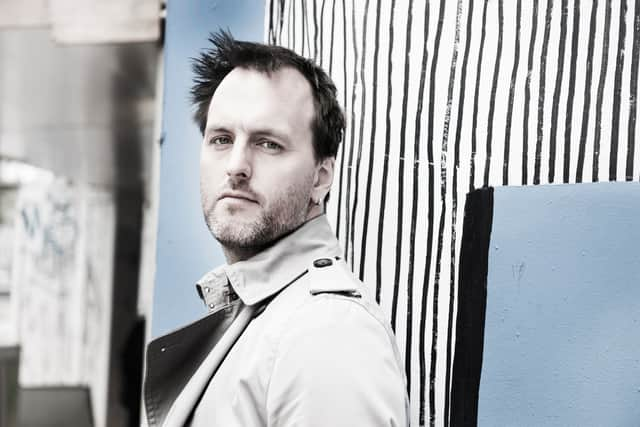
Following a farewell tour in 2016, Bellowhead made the decision to take a hiatus after Boden made the decision to step down as the band’s frontman after a successful 12 years at the helm. “I decided to leave; it wasn't that the band was supposed to disband initially. I made an album called Songs to the Floodplain 2009, which was kind of really well reviewed, and people were very excited about it. And I was very excited about it. But then Bellowhead kind of took off,” Boden remembered.
“I kind of had to shelve that to focus on Bellowhead. And I just, you know, I've been doing Bellowhead then for, what, 15 years or whatever it was? Bellowhead is not a band that does songwriting; we do traditional songs. And that's sort of the rule.
“So I was like, well, if I want to be a songwriter, if I want to explore this side of what I do, then I need to do it. And I didn't, and it's quite difficult when you do something, and it just sort of gets swamped by another thing that you're also doing, if you know what I mean? So you end up sort of competing with yourself. So I was like, well, I don't want to go through that again, where I bring out an album and everyone's like, yeah, that's great. When's the next Bellowhead album? So, you know, it's absolutely a privilege to be part of a band that is so popular that it's able to swamp other things.
“But sometimes you kind of want to focus on different stuff. So that's why I decided to leave. And I assumed they would carry on without me. Because we've always been a collective, and it's always been more than the sum of its parts, Bellowhead. So I assumed they'd carry on without me. And they talked about it a bit, and then they decided to take a break.
“And then it sort of became quite a long break. And then by the time they were ready to sort of get back together, I was actually ready to rejoin anyway. So that's what we did in 2022,” Boden concluded.
The post-climactic change-themed trilogy
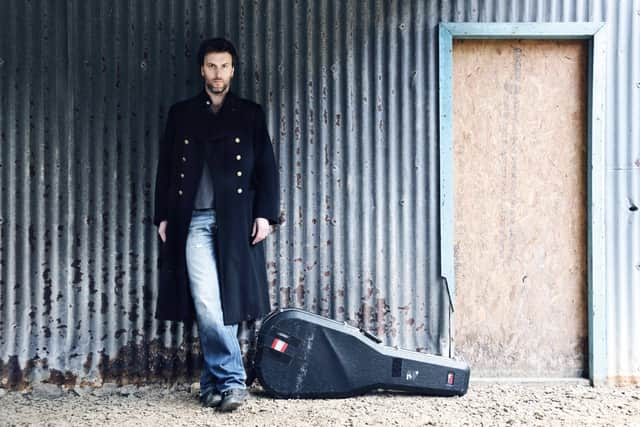
During his time away from Bellowhead, Boden had the opportunity to release music as a solo artist, releasing his post-climactic change-themed trilogy of albums – 'Songs From The Floodplain’, ‘Afterglow’ and ‘Last Mile Home’. Naturally, science-fiction and post-apocalyptic themes are not ones usually associated with folk music, but Boden made it work.
“I was interested in the idea of how in a post-climate change scenario, or indeed a post-apocalyptic scenario, I mean, I'm quite interested in literature that explores those ideas. And quite often it's as much about what we get back as what we lose, you know. And you quite often get books that describe how community comes back when you take away all the trappings of modern comfort, particularly. I think there's something about the convenience and comfort of modern life that has mitigated against our ability to actually function as communities,” the Bellowhead frontman stated.
“And so actually if you take away television and, you know, circulating and, you know, the internet or whatever, then, you know, we've seen this happen, you know, when you see it happen when you have power cuts or whatever, people start talking to the neighbours more. So I was more interested in how folk music and indeed folk custom and folk culture might sort of come back into its own in a potential future where we aren't sort of siloed away from each other by social media and technological convenience,” Boden finished.
As a self-confessed literature lover, Boden fulfilled a career ambition of writing scores for Royal Shakespeare Company productions of ‘The Merchant of Venice’ and ‘The Winter's Tale’. “It was like a dream come true really. It was great. "I mean, it's pretty hard work, though,” Boden admitted.
“It's such a big production in both senses of the word, working for the RSC; so many people are involved. It's a big deal. So you are a sort of small cog in a big machine, and yeah, it was hard; it was, and it can be quite brutal theatre, and I've done quite a lot of it, so I was aware of this, but you'll write what you think is a great musical cue, and everyone's really excited about it, and then they'll be like, 'Actually, we've cut that because we can save three minutes if we just run straight into the next scene,' or do you know what I mean? So it's sort of quite a brutal experience,” Boden stated.