
Bygone Burnley: Lowerhouse, with historian Roger Frost MBE
Today’s Bygone Burnley epsiode sees us venture into Lowerhouse, an area of Burnley once dominated by a significant cotton mill and the influence of two wealthy families.
Respected local historian Roger Frost MBE guides us around the area once known as Thornhill and part of the township of Habergham Eaves.
In our video, Roger explains the early industrial development of Lowerhouse and the influence of two very famous families.
“In 1786 a map was produced of this part of the Burnley area and it doesn’t even mention Lowerhouse. Despite this, it was a splendid example of an early industrial community,” he said.
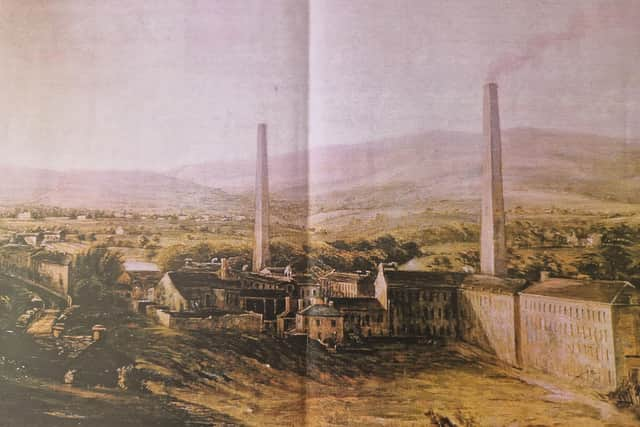

“Around Lowerhouse, homes were built for an ever increasing number of workers. The company that started this growth was owned by the Peel family, which included Prime Minister Robert Peel.
“The first one they constructed in Burnley was in Lowerhouse. The family sold their mill and other industrial premises around 1813 to the Dugdale family from Great Harwood.
“The Dugdales went on to develop both sides of the industry – calico printing and cotton spinning and weaving. In fact, the mill here was the only integrated site in the whole area where all the processes were carried out.”
That huge integrated mill was built in 1836 on the site of what is now Riverside Mews housing development.
Our video then goes on to explore the last remaining original wall of the calico printing side of the business, and the variety of homes in the area.
“There’s quite an assortment of houses in Lowerhouse. Victoria Terrace was built for the owners and managers, while smaller cottages in the area were built for the workers,” Roger explains.

The corner of Lowerhouse Lane and Wellesley Street was famous for its two shops, one of which was the Lowerhouse Co-operative Society, which was founded in 1872 in the days of the Dugdales.
Roger said: “Although the Dugdales were very good employers in some respects, they also owned the village shop and could charge what they wanted and made big profits. The workers were not the sort of people who would accept this, and thus they founded the Co-operative Society, which served half the families of Lowerhouse.
“However, in 1895 it was bought out by the larger Burnley Co-oparative Society.”
Directly across the road from the former Co-op is the still in use Lowerhouse Mills Canteen, a development by the Dugdales which was welcomed by the workers.
“The canteen was used like a social club. Lowerhouse also benefited from the Dugdales in that all the churches, chapels and schools in the area were funded by the family. Lowerhouse became a real community.”
Our next stop is Lowerhouse Cricket Club, founded by the Drew family, who owned the calico printing works. The Drews were a big sporting family which included a member who represented Scotland in their first international rugby match. The family tried to encourage sporting pursuits in their workers. Neighbouring Thornhill Street is named after the original name for the area.
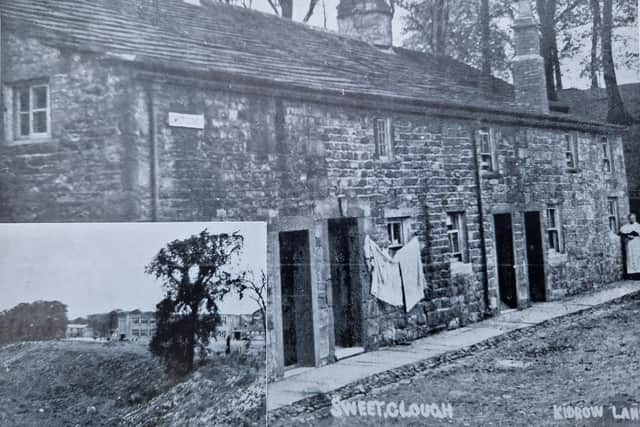
Finally, we look at Kiddrow Lane and the fascinating origins of its unique name, as well as Sweetclough which had some charming cottages.
“Kiddrow is a unique name because it comes from a spelling of Clitheroe. In the past it was the lane that led through Padiham to Clitheroe,” Roger reveals.