
Therapy dog at St. Michael's Primary School
We've recently welcomed a new member to our school family – Mo, an 8-month-old Labrador who is our very own therapy dog. Mo is currently working towards his PAW therapy dog certification, and the school has already seen the positive impact he is having on our school environment.
The decision to introduce a therapy dog at St. Michael's wasn't taken lightly. Extensive research has shown that therapy and reading dogs can bring numerous benefits to school settings. Headteacher, Sara Richardson states, "Mo is a wonderful addition to our emotional well-being provision, complementing the interventions we already offer and potentially engaging pupils who have found it challenging to access talking therapies in the past."
The advantages of having a school dog are truly remarkable. Studies have demonstrated that interactions with therapy dogs can enhance pupils' reading skills, improve behaviour and attendance, boost academic confidence, and foster a greater understanding of responsibility. Moreover, these furry friends help children develop empathy and nurturing skills – all while bringing joy and excitement to our school community.
Animal-assisted interventions have been shown to teach empathy and appropriate interpersonal skills, aid in the development of social skills, and provide a soothing presence. They can also improve a child's ability to interpret social cues, which is crucial for building human relationships. Therapy dogs have a positive impact on emotional regulation through their influence on the autonomic nervous system, and they've been known to increase motivation for learning, resulting in improved outcomes.
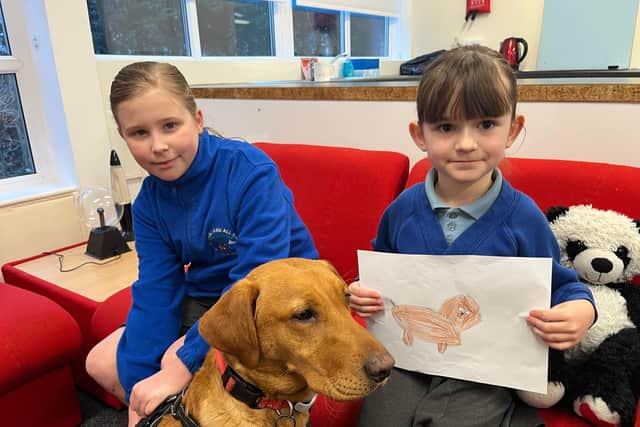

Headteacher Sara Richardson, states: "The benefits don't stop there. Research indicates that therapy dogs in schools can lead to increased attendance, improved confidence, and decreased anxiety in pupils. This, in turn, can result in improvements in learning, such as higher reading and writing levels. Children working with therapy dogs often experience enhanced relationships with their peers and teachers, as they encounter trust and unconditional positive interactions."
At school we have seen first hand one of the most heartwarming aspects of introducing a therapy dog -how it is helping children learn to express their feelings and build more trusting relationships. It's a wonderful way to increase social skills, boost self-esteem, and teach responsibility and respect for all life.
One parent remarked: “Our daughter struggles on a daily basis with anxiety and going to school. Her autism makes it hard for her to communicate with people but she absolutely loves animals, especially dogs. On the days that Mo is coming into school we see a completely different side to her. The excitement and happiness about seeing him is wonderful for us to see. Often when she comes home from school, she is reluctant to speak about her day, but on the days that Mo is there, she can't wait to come home and tell us all about it. The smile on her face and how happy she is when speaking about Mo is lovely for us to see.”
Mo provides comfort, encourages positive social behaviour, enhances self-esteem, motivates speech and inspires children to have fun and enjoy the non-judgemental experience.
As we embark on our journey with Mo, we are looking forward to seeing the amazing impact Mo will have on our children.