
Ss John Fisher & Thomas More RC High School in Colne bans mobile phones during the day - here's why
A Colne headteacher is making waves with his school’s transformational mobile phone policy.
Mr Paul Dugdale was invited to talk about the partial phone ban at Ss John Fisher & Thomas More RC High School on BBC Breakfast and Radio 5 Live last Friday.
Pupils can bring their mobiles into school in the mornings to contact their parents and access digital bus passes. But the devices are locked away during the day in specialised lockers, and the school uses handheld metal detectors to scan the pupils for any hidden phones.
Mr Dugdale introduced the policy to protect pupils against online bullying and dangerous content and it’s been in place ever since he joined the school in September. Fisher More already filters and monitors online content on its school laptops but the headteacher says he was concerned that pupils could bypass this safety system via their own phones, adding: “You hear horror stories on the news about social media algorithms showing pupils serious violence and inappropriate images.”
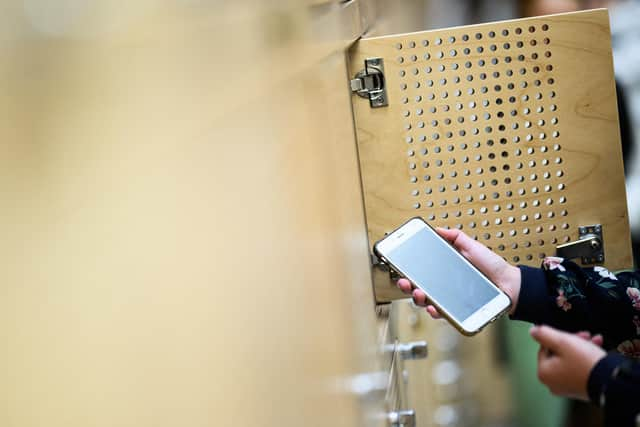

Politicians recently debated the Safer Phones Bill, which aims to ban smartphones in schools. Mr Dugdale believes social media should be banned entirely for under 16s, saying: “The social media companies are big multi-million pound businesses who sell people’s data. Their sites are made to be addictive and the algorithms target vulnerable pupils. I don’t think children should be exposed to it until they’re 16 when their brains are more developed and they’re less vulnerable.”

His concerns about young people’s phone use reflects the findings of a government report, named Screen Time: Impacts on Education and Wellbeing. Published last May, the report found that children’s screen time increased by 52% between 2020 and 2022. And nearly 25% of young people appear to be addicted to their smartphones.
It also showed that screen use starts as early as six-months-old. One in five children aged between three and four have their own mobile phone, increasing to one in four by eight-years-old and to almost all children by age 12. The amount of time those aged five to 15 spent online rose from an average of nine hours per week in 2009, to 15 hours per week in 2018.
While social media and online gaming can help children feel less lonely, research by the Children’s Commissioner for England found that 79% had encountered violent pornography by 18, with the average age that children first see pornography being 13. And child sexual abuse online has risen by 400% since 2013.
The research revealed that 81% of girls aged seven to 21 have experienced threatening or upsetting behaviour online. And ONS data suggests that one in five children (19%) aged 10–15 experienced cyber bullying, of which around three-quarters (72%) experienced some of it at school or during school time.
Fisher More hopes to combat such harms, with Mr Dugdale saying its policy has seen positive results, such as pupils connecting face-to-face more regularly at break times. Parents support the move, he added, “and the kids have taken to it.
"They didn’t like the thought of it at first but now they know it helps keep them safe and they get on with their work better. They knew it was coming and everyone is doing it so they crack on with it.”